We unleash your business potential by maximize the business innovation.
Send EmailAllura Red, Red Food Dye, Flag Red, Oil Based Powder, Red 17, E129, 25956-17-62
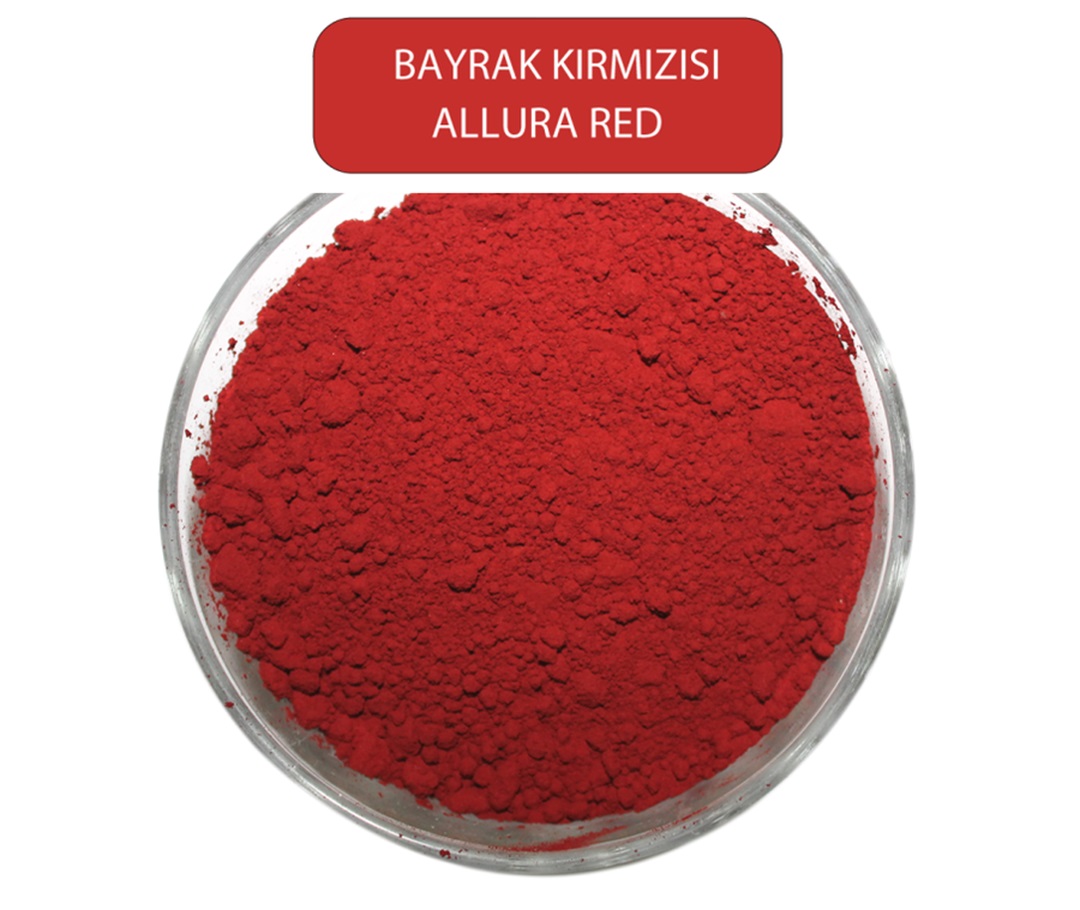
Allura Red (E129) – Red Food Dye (Red 17)
| Property | Detail |
|---|---|
| Color Name | Allura Red, Bayrak Kırmızısı (Flag Red) |
| Food Code | E129 |
| Color Shade | Bright, vibrant red (flag red tone) |
| Colour Index Name | Red 17 |
| Colour Index Number | CI 16035 |
| CAS Number | 25956-17-6 |
| Chemical Formula | C₁₈H₁₄N₂O₈S₂·2Na (Lake form contains aluminum salt) |
| Molecular Weight | 496.42 g/mol (water-soluble form) |
| Chemical Class | Azo dye |
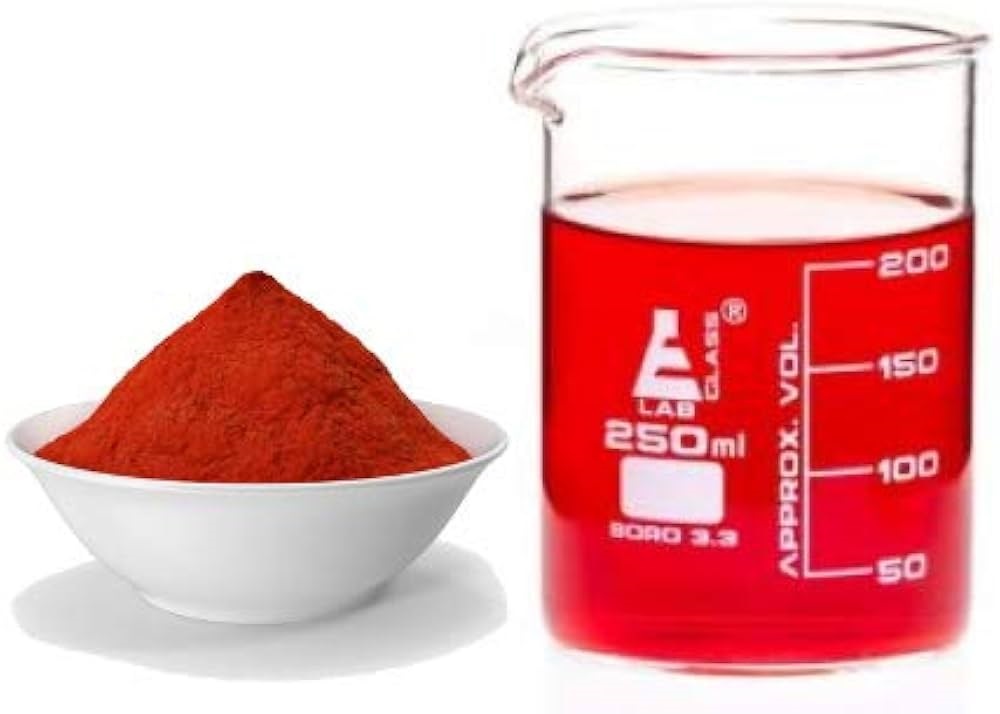
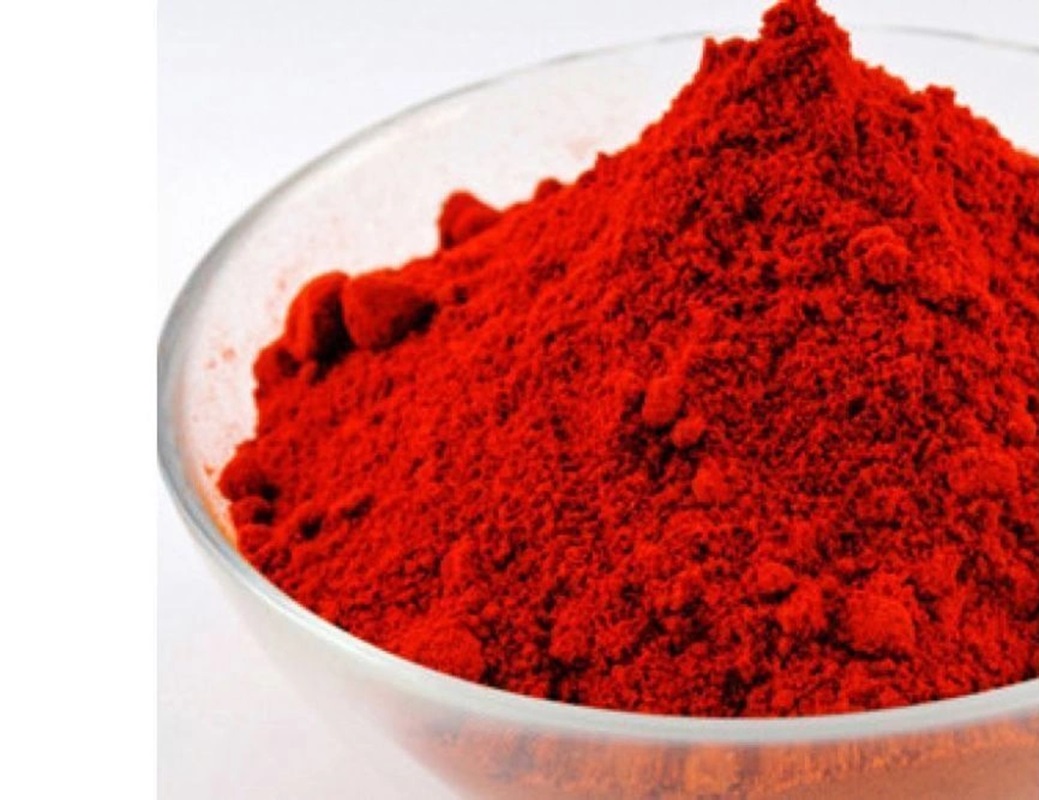
| Physical Form | Bright red, fine powder (Lake form) |
| Solubility | Insoluble in water; dispersible in oils and organic solvents |
| pH Stability | Stable in pH 3-8 range |
| Heat Resistance | Resistant up to 200°C |
| Light Fastness | Good to very good (6-7/8) |
| US Name | FD&C Red No. 40 |
What is it?
Lake Allura Red E129 is a synthetic red food colorant widely used in the food industry. Known by the code E129, this oil-based powder dye has a flag red (bright red) color and is preferred especially for homogeneous coloring in food products with high oil/fat content.
Important Distinction: The Lake form of Allura Red is insoluble in water and dispersible in oils, making it suitable for fat-based systems. This is different from the water-soluble form of Allura Red.
Key Points:
-
Lake Allura Red E129 is a synthetic red dye known by the code E129 in the food industry.
-
The oil-based powder food dye is a lake-type colorant that does not dissolve in water but disperses in oils.
-
Allura Red E129 only provides coloring properties; it has no sweetening or flavoring effect.
-
Also known as: Lake Allura Red, E129 Food Dye, Oil-Based Powder Dye, FD&C Red No. 40 (USA).
Chemical Structure and General Properties
Allura Red E129 (CAS No: 25956-17-6) belongs to the azo dye class of synthetic food colorants. The lake form, suitable for use in oil-based systems, is precipitated onto an aluminum substrate.
| Property | Detail |
|---|---|
| Chemical Formula | C₁₈H₁₄N₂O₈S₂·2Na (Lake form contains aluminum salt) |
| Molecular Weight | 496.42 g/mol (water-soluble form) |
| Colour Index | CI 16035 |
| Appearance | Bright red, fine powder |
| Solubility | Insoluble in water; dispersible in oils and organic solvents |
| pH Stability | Stable in pH 3-8 range |
| Heat Resistance | Resistant up to 200°C |
| Light Fastness | Good to very good (6-7/8) |
| Color Shade | Bright, vibrant red (flag red tone) |
| Application Areas | Food, pharmaceutical, and cosmetic industries |
| ADI (Acceptable Daily Intake) | 7 mg/kg body weight/day (EFSA) |
Applications in the Food Industry
Allura Red E129 lake form is preferred in water-free or low-moisture, oil-based food products.
Oil-Based Powder Dye Applications
| Product Category | Benefit / Reason |
|---|---|
| Chocolate and Coatings | Provides color homogeneity, prevents blooming |
| Biscuits, Cookies, Wafer Fillings | Heat-resistant structure prevents color loss during baking |
| Dry Mixes | Pudding, cake, pastry powder mixes |
Red Food Dye Applications
| Product Category | Examples |
|---|---|
| Confectionery | Hard candies, jelly candies, chewing gum |
| Beverage Powders | Fruit drink powder mixes |
| Ice Cream and Dairy Desserts | (In oil-based systems) |
Powder Food Dye Applications
| Product Category | Examples |
|---|---|
| Bakery Products | Creams, fillings, ganache |
| Ready-Made Sauces and Soups | Coloring in the fat phase |
| Snacks | Chips, extruded products |
Safety and Potential Risks
| Risk | Description |
|---|---|
| Allergic Reactions | Excessive consumption may cause allergic reactions in sensitive individuals, especially those with asthma and aspirin allergy. |
| Hyperactivity and Attention | Some research suggests that E129 (together with certain other artificial colors) may contribute to hyperactivity and attention deficit disorder (ADHD)-like behavioral problems in children. |
| Acceptable Daily Intake (ADI) | 0-7 mg/kg body weight/day (EFSA) – This is the highest ADI among common red azo dyes. |
| Carcinogenicity Concerns | Regulatory authorities (EFSA, FDA) consider E129 safe within established ADI limits. |
Comparison with Other Red Food Dyes
| Feature | E129 (Allura Red) | E124 (Ponceau 4R) | E122 (Carmoisine) | E120 (Carmine) |
|---|---|---|---|---|
| Source | Synthetic (azo) | Synthetic (azo) | Synthetic (azo) | Natural (insect-derived) |
| Color Shade | Bright red (flag red) | Bright red / Ruby red | Dark red / Reddish-violet | Deep red / Crimson |
| ADI (mg/kg) | 0-7 (highest) | 0-4 | 0-4 | 0-5 |
| USA Status | Permitted (FD&C Red 40) | Banned | Banned | Permitted |
| EU Status | Permitted (warning label) | Permitted (warning label) | Permitted (warning label) | Permitted |
| Heat Resistance | Very high (200°C) | Moderate | Moderate | Moderate |
| Lake Form Available | Yes | Yes | Yes | Yes |
Important Warnings
-
Not a Sweetener: Allura Red E129 is not a sweetener; it is used solely for coloring purposes.
-
Lake Form Insolubility: The lake form is insoluble in water-based systems. Incorrect application may cause color spotting or precipitation.
-
Allergic Reactions: Sensitive individuals (especially those with asthma and aspirin allergy) may experience allergic reactions with excessive consumption.
-
EU Warning Label: According to EU regulations, products containing E129 must carry the warning: "May have an adverse effect on activity and attention in children."
-
Tartrazine Sensitivity: Individuals with tartrazine (E102) sensitivity may also be sensitive to Allura Red.
Legal Status and Regulations
| Region | Status | Note |
|---|---|---|
| European Union | Permitted | Warning label required (with E110, E104, E122, E124, E129) under Regulation 1333/2008 |
| Turkey | Permitted | Compliant with Turkish Food Codex (Türk Gıda Kodeksi) regulations |
| United States (FDA) | Permitted | Approved as FD&C Red No. 40 |
| Japan | Permitted | |
| Norway | Restricted / Banned | Restrictions on certain product groups |
| Austria | Restricted | Restrictions on certain product groups |
| France | Restricted | Restrictions on certain product groups |
Comparison: Lake Form vs. Water-Soluble Form
| Feature | Lake Form (Oil-Based) | Water-Soluble Form |
|---|---|---|
| Solubility | Insoluble in water; dispersible in oils/fats | Soluble in water |
| Application | Oil/fat-based systems (chocolate, coatings, fillings) | Water-based systems (beverages, syrups, icings) |
| Color Stability | Very stable | Good |
| Heat Resistance | Excellent (up to 200°C) | Good |
| Typical Products | Chocolate, baked goods, dry mixes | Soft drinks, candies, pharmaceutical syrups |
Sector Suitability Table
| Sector | Application Area | Suitability | Notes |
|---|---|---|---|
| Food (Oil-Based) | Chocolate, coatings, fillings, dry mixes | ✅ High | Lake form preferred |
| Food (Water-Based) | Beverages, syrups, icings | ✅ High | Water-soluble form preferred |
| Confectionery | Hard candies, jellies, gum | ✅ High | Both forms used depending on system |
| Pharmaceuticals | Tablet coatings, syrups | ✅ High | FD&C Red 40 approved |
| Cosmetics | Lipsticks, blushes, shampoos | ✅ High | Widely used |
| Bakery | Creams, fillings, cake decorations | ✅ High | Heat-resistant lake form ideal |
| Snacks | Chips, extruded snacks | ✅ Moderate | Lake form used |
Summary
| Question | Answer |
|---|---|
| What is E129? | Allura Red, a synthetic red azo dye (FD&C Red 40 in the USA). |
| What is the lake form? | An oil-dispersible, water-insoluble form precipitated on aluminum substrate, used in fat-based systems. |
| Is it safe? | Considered safe by EFSA and FDA within ADI limits (0-7 mg/kg). |
| What is the ADI? | 7 mg/kg body weight/day (highest among common red azo dyes). |
| Is it banned in the USA? | No, E129 is permitted in the USA as FD&C Red No. 40. |
| Who are sensitive groups? | Asthmatics, aspirin-sensitive individuals, children with ADHD (sensitive individuals). |
| What products contain it? | Candies, beverages, chocolate, baked goods, dry mixes, pharmaceuticals, cosmetics. |
| Is there a warning label? | Yes, in the EU: "May have an adverse effect on activity and attention in children." |
| How is it listed on labels? | E129, Allura Red, FD&C Red No. 40, CI 16035, Red 17. |
Key Takeaway
Allura Red (E129) is a widely used synthetic red azo dye permitted in both the EU and the USA (as FD&C Red No. 40). It has the highest ADI (7 mg/kg) among common red azo dyes, indicating a relatively wider safety margin. The lake form is specifically designed for oil/fat-based systems (chocolate, coatings, baked goods) and is insoluble in water. While regulatory authorities consider it safe, it may cause allergic reactions in sensitive individuals (asthmatics, aspirin-sensitive) and carries a hyperactivity warning label in the EU.