We unleash your business potential by maximize the business innovation.
Send EmailIndigo Carmine, Indigotine, Dark Blue Food Dye, E132, 860-22-0
Indigo Carmine (E132) – Dark Blue Food Dye
| Property | Detail |
|---|---|
| Color Name | Indigo Carmine, Indigotine |
| Food Code | E132 |
| Color Shade | Dark blue (violet to blue tones) |
| Colour Index Number | 73015 |
| CAS Number | 860-22-0 |
| EC Number | 212-728-8 |
| Beilstein Number | 4103904 |
| MDL Number | MFCD00005723 |
| UNSPSC Code | 12171500 |
| PubChem Substance ID | 24847997 |
| NACRES | NA.47 |
| Empirical Formula (Hill Notation) | C₁₆H₈N₂Na₂O₈S₂ |
| Molecular Weight | 466.35 g/mol |
| Chemical Class | Indigoid dye |
What is it?
Indigo Carmine (E132) is a synthetic blue colorant used in the food industry. It provides a dark blue color ranging from violet to blue tones. Chemically, it belongs to the indigoid dye class and is the disodium salt of indigo-5,5'-disulfonic acid. It is a sulfonated, water-soluble derivative of natural indigo dye.
Interesting Fact: Indigo Carmine is also used in medical diagnostics (kidney function tests, cystoscopy) and histology (tissue staining).
Which Products Is It Used In?
Indigo Carmine (E132) is used in many different food and non-food product categories:
| Category | Examples |
|---|---|
| Confectionery | Hard candies, gummies, dragées, chewing gum |
| Ice Cream & Desserts | Ice cream, sorbets, puddings, jellies |
| Beverages | Carbonated soft drinks, fruit drinks, sports drinks, energy drinks |
| Bakery Products | Cookies, cakes, pastries (colored creams and decorations) |
| Sauces & Condiments | Certain sauces, ketchups, mustards (for blue-purple tones) |
| Processed Fruit Products | Fruit preserves, jams, fruit-filled products |
| Pharmaceuticals | Tablet coatings, capsules, syrups |
| Cosmetics | Shampoos, soaps, lotions, makeup products |
Potential Health Risks and Concerns
While Indigo Carmine (E132) is generally considered safe, it may cause adverse effects in some individuals.
| Risk | Description |
|---|---|
| Allergic Reactions | Some individuals may experience allergic reactions such as skin rashes, itching, hives (urticaria), or respiratory problems. Rarely, anaphylaxis (severe allergic reaction) has been reported. |
| Hyperactivity and Attention | Some research suggests that E132 (together with certain other artificial colors) may contribute to hyperactivity and attention deficit disorder (ADHD)-like behavioral problems in children. In the EU, foods containing E132 (along with E110, E104, E122, E124, E129) must carry a warning label. |
| Stomach Discomfort | When consumed in high amounts, some individuals may experience digestive issues such as nausea, vomiting, or diarrhea. |
| Medical Use Warning | When used for medical diagnostic purposes (e.g., by injection), it may cause side effects such as hypertension, cardiac arrhythmias, and in rare cases, severe hypotension (sudden drop in blood pressure). These effects are specific to medical applications and not related to food consumption. |
| Carcinogenicity Concerns | While some concerns have been raised in animal studies at high doses, there is no conclusive evidence that E132 is carcinogenic to humans at typical food intake levels. Regulatory authorities (EFSA, FDA) consider it safe within established daily intake limits. |
Precautions
-
Safe Consumption Limits: It is important to keep consumption of Indigo Carmine and other artificial colorants within established safe limits.
-
Acceptable Daily Intake (ADI): 0-5 mg/kg body weight/day (EFSA - European Food Safety Authority)
-
Comparison: E132's ADI is slightly higher than E110 and E124 (5 mg/kg vs. 4 mg/kg).
-
-
Allergic Reaction Symptoms: Individuals who show any signs of an allergic reaction should avoid such substances and consult a healthcare professional.
-
Label Reading Habit: Carefully read food and beverage labels and understand the ingredients.
-
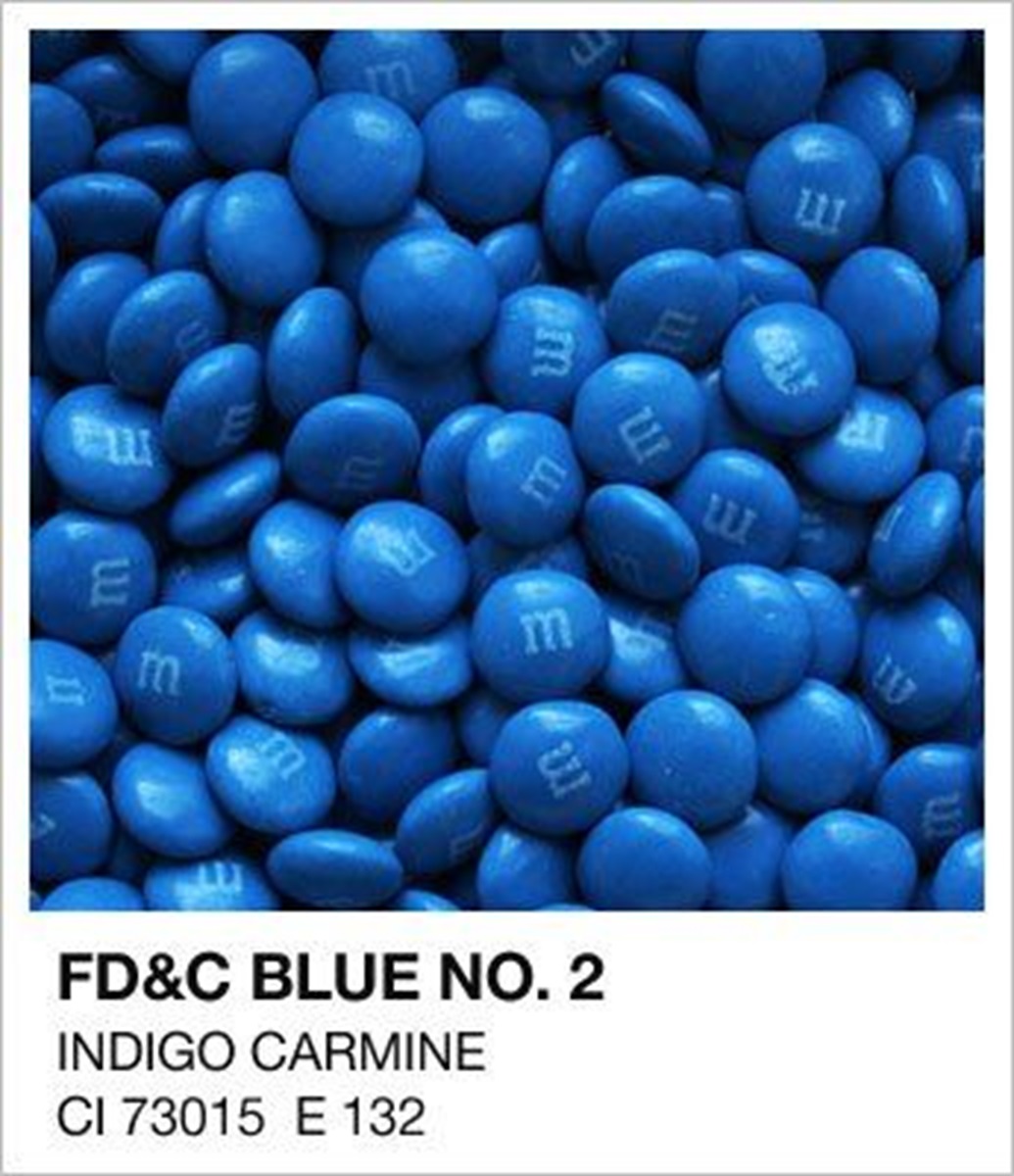
May appear on labels as: E132, Indigo Carmine, Indigotine, FD&C Blue No. 2, CI 73015
-
-
Natural Alternatives: Research and prefer healthier natural alternatives where possible.
-
Examples of natural blue colorants:
-
Spirulina (derived from blue-green algae)
-
Hibiscus (purple-blue tones)
-
Red cabbage (color changes with pH; blue tones can be achieved)
-
Grape skin extract
-
-
Legal Status and Labeling
| Region | Status | Note |
|---|---|---|
| European Union | Permitted | Warning label required due to Southampton Study (together with E110, E104, E122, E124, E129) |
| Turkey | Permitted | Compliant with EU regulations; warning label required |
| USA (FDA) | Permitted | Registered as FD&C Blue No. 2; no warning label required |
| Japan | Permitted | |
| Norway | Restricted | Subject to restrictions on certain products |
EU Warning Label: "May have an adverse effect on activity and attention in children."
Note: Unlike E124 (Ponceau 4R), E132 is permitted in the USA as FD&C Blue No. 2.
Physical and Chemical Properties (Summary)
| Property | Value |
|---|---|
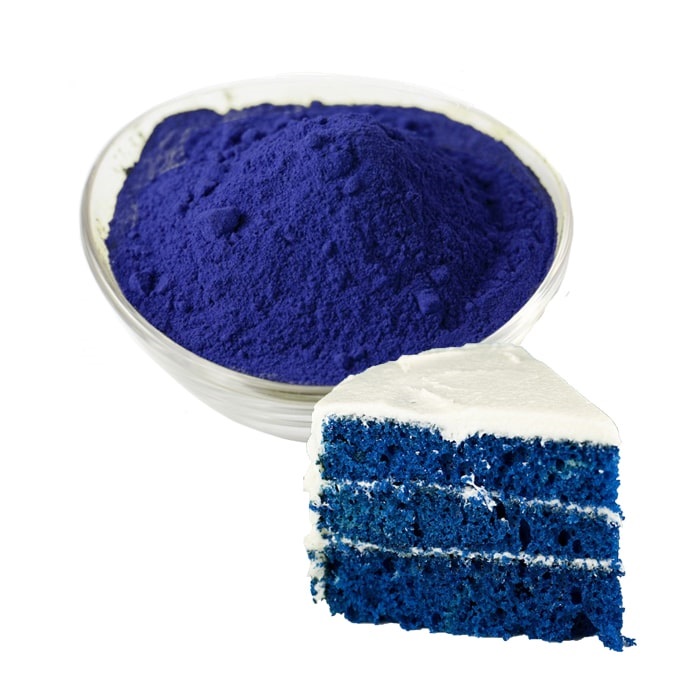
| Appearance | Dark blue powder or granules |
| Solubility | Soluble in water (blue solution) |
| pH Sensitivity | Turns from blue to yellow at pH 11.4 |
| Light Stability | Low to moderate (may fade in light) |
| Heat Stability | Moderate |
| Maximum Absorption | Approximately 610 nm (in aqueous solution) |
E132 vs. Other Blue Food Dyes (Comparison)
| Feature | E132 (Indigo Carmine) | E133 (Brilliant Blue FCF) | Spirulina (Natural) |
|---|---|---|---|
| Source | Synthetic (indigoid) | Synthetic (triphenylmethane) | Natural (algal) |
| Color Shade | Dark blue | Bright blue (cyan tone) | Blue-green |
| Light Fastness | Low-Moderate | High | Moderate-High |
| pH Sensitivity | High (changes color above pH 11) | Low | Moderate |
| USA Status | Permitted (FD&C Blue No. 2) | Permitted (FD&C Blue No. 1) | Permitted |
| EU Warning Label | Yes (behavioral effects) | No | No |
| Cost | Low | Low | High |
| Vegan/Natural | No (synthetic) | No (synthetic) | Yes (natural) |
Blend Usage for Different Shades
E132 is often mixed with other colorants to achieve different shades:
| Blend | Resulting Color |
|---|---|
| E132 (Blue) + E110 (Yellow) | Green tones |
| E132 (Blue) + E124 (Red) | Purple tones |
| E132 (Blue) + E122 (Red) | Violet tones |
| E132 (Blue) + E102 (Yellow) | Light green tones |
Sector Suitability Table
| Sector | Application Area | Suitability | Notes |
|---|---|---|---|
| Food | Confectionery, beverages, ice cream, bakery, sauces | ✅ Widespread | Warning label required in EU; freely used in USA |
| Pharmaceuticals | Tablet coatings, capsules, syrups | ✅ Widespread | Also used in medical diagnostics (injection form) |
| Cosmetics | Shampoos, soaps, lotions, makeup | ✅ Widespread | Must be labeled |
| Textiles | — | ❌ Low | Not commonly used in textile dyeing (indigo is different) |
| Medical Diagnostics | Kidney function tests, cystoscopy | ✅ Special use | Injection form; administered under medical supervision |
| Pet Food | Dry food, treats | ✅ Permitted | Can be used within legal limits |
Summary
| Question | Answer |
|---|---|
| What is E132? | Indigo Carmine, a synthetic blue colorant used in food, pharmaceuticals, and cosmetics. |
| Is it the same as natural indigo? | No. E132 is a sulfonated, water-soluble derivative of natural indigo dye. |
| Is it safe? | Considered safe by EFSA and FDA within established daily intake limits (ADI 0-5 mg/kg). |
| Is it banned in the USA? | No, E132 is permitted in the USA as FD&C Blue No. 2. |
| Who are sensitive groups? | Aspirin-sensitive individuals, asthmatics, children with ADHD (sensitive individuals) |
| What products contain it? | Candies, ice cream, beverages, baked goods, pharmaceuticals. |
| Are there natural alternatives? | Yes: spirulina, red cabbage, grape skin extract. |
| How is it listed on labels? | E132, Indigo Carmine, Indigotine, FD&C Blue No. 2, CI 73015. |
Key Takeaway
Indigo Carmine (E132) is a widely used synthetic blue colorant permitted in both the EU and the USA (as FD&C Blue No. 2). While regulatory authorities consider it safe within established ADI limits (0-5 mg/kg), it may cause allergic reactions in sensitive individuals and carries a hyperactivity warning label in the EU. It is also used in medical diagnostics (injection form), which can have more serious side effects (these are specific to medical applications, not food consumption). Aspirin-sensitive individuals, asthmatics, and parents of children with behavioral concerns should be particularly attentive to labels containing E132.