We unleash your business potential by maximize the business innovation.
Send EmailSunset Yellow, Dark Yellow, Food Yellow 3, Food Dye, E110, 2783-94-0
Sunset Yellow (E110) – Food Yellow 3
| Property | Detail |
|---|---|
| Color Name | Sunset Yellow, Koyu Sarı (Dark Yellow) |
| Food Code | E110 |
| Colour Index Name | Food Yellow 3 |
| CAS Number | 2783-94-0 |
| Molecular Weight | 452.369 g/mol |
| Chemical Class | Azo dye |
| Solubility | Water-soluble |
| Color Shade | Bright orange-yellow |
What is it?
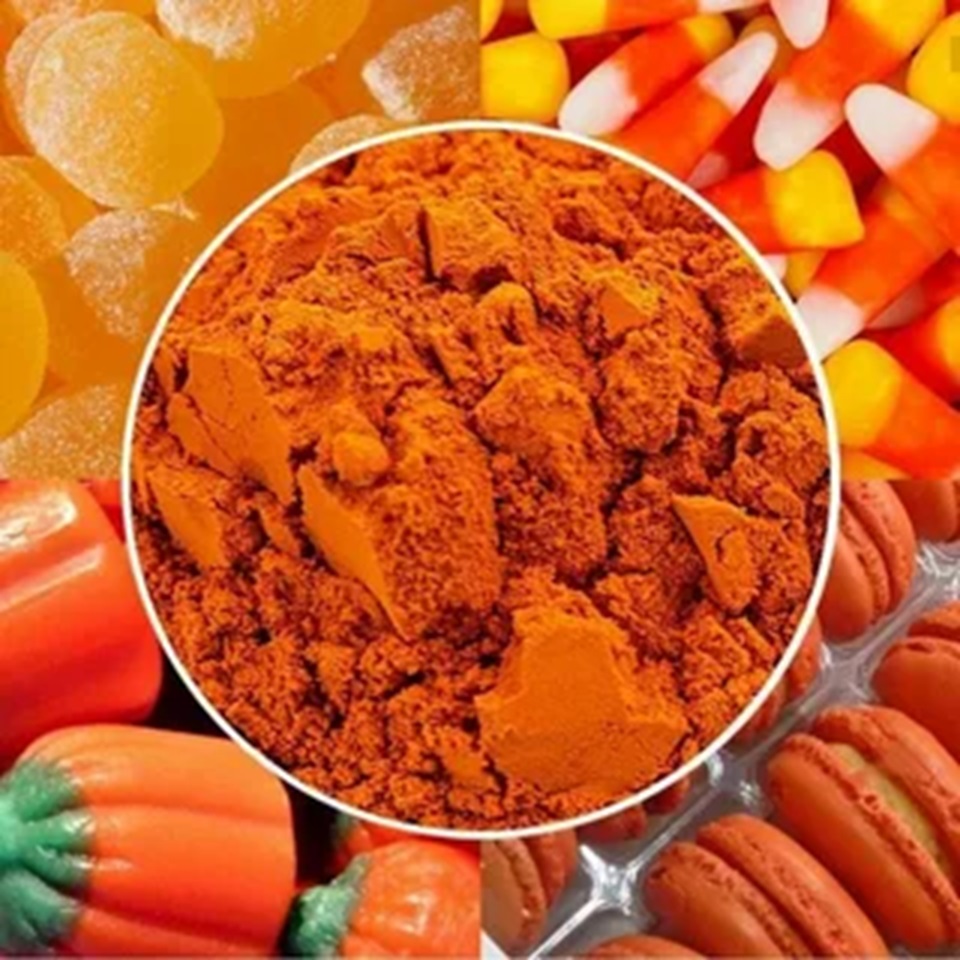
Sunset Yellow (E110) is a synthetic colorant widely used in the food industry. It gives foods a bright orange-yellow color. Chemically, it belongs to the azo dye class and is water-soluble.
Main Product Categories:
| Category | Examples |
|---|---|
| Confectionery | Jellies, puddings, cakes, pastries |
| Beverages | Fruit-flavored drinks, carbonated soft drinks, energy drinks |
| Candy & Sweets | Hard candies, gummies, chewing gum, dragées |
| Soups | Instant soup mixes |
| Ice Cream | Fruit-flavored ice creams, sherbets |
| Snacks | Salty snacks (some chips), breakfast cereals |
| Sauces | Mustard, some fruit sauces |
Potential Health Risks and Concerns
Sunset Yellow has some potential health risks and concerns.
| Risk | Description |
|---|---|
| Allergic Reactions | May cause skin rashes, itching, swelling, difficulty breathing, and digestive issues in sensitive individuals. More common in those with aspirin sensitivity. |
| Hyperactivity and Attention | Some studies suggest that Sunset Yellow (together with certain other artificial colors) may contribute to hyperactivity and attention deficit disorder (ADHD)-like behavioral problems in children. While evidence exists, some countries require warning labels on foods containing these colors. |
| Asthma Symptoms | Sunset Yellow may trigger or worsen asthma symptoms. Asthma sufferers are advised to be cautious when consuming such colorants. |
| Children and Pregnancy | Experts recommend that children and pregnant women be more careful when consuming artificial colorants, as they may have higher sensitivity. |
| Cancer Risk (Controversial) | Some azo dyes have been observed to cause tumors in animals at high doses. However, there is no conclusive evidence that E110 is carcinogenic to humans at typical food intake levels. Regulatory authorities (EFSA, FDA) consider it safe within established daily intake limits. |
Precautions
-
Safe Consumption Limits: It is important to keep consumption of Sunset Yellow and other artificial colorants within established safe limits.
-
Acceptable Daily Intake (ADI): 0-4 mg/kg body weight/day (EFSA - European Food Safety Authority)
-
-
Allergic Reaction Symptoms: Individuals who show any signs of an allergic reaction should avoid such substances and consult a healthcare professional.
-
Label Reading Habit: Carefully read food and beverage labels and understand the ingredients.
-
May appear on labels as: E110, Sunset Yellow, FD&C Yellow No. 6, Food Yellow 3
-
-
Healthy Alternatives: Research and prefer healthier alternatives.
-
Examples of natural yellow colorants:
-
Turmeric (Curcumin / E100)
-
Rosemary extract
-
Saffron
-
Beta-carotene (E160a)
-
-
Legal Status and Labeling
| Region | Status | Note |
|---|---|---|
| European Union | Permitted | Warning label required: "may have an adverse effect on activity and attention in children" (due to Southampton Study) |
| Turkey | Permitted | Compliant with EU regulations; warning label required |
| USA (FDA) | Permitted | Registered as FD&C Yellow No. 6; no warning label required |
| Norway & Austria | Restricted / Banned | Certain product restrictions apply |
| Japan | Permitted |
EU Warning Label: "May have an adverse effect on activity and attention in children."
Physical and Chemical Properties (Summary)
| Property | Value |
|---|---|
| Appearance | Reddish-orange powder or granules |
| Solubility | Very soluble in water |
| pH Stability | Stable in acidic medium (pH 1-7) |
| Light Stability | Moderate |
| Heat Stability | Good (withstands pasteurization and high-temperature processes) |
| Maximum Absorption | Approx. 480-485 nm |
Sector Suitability Table
| Sector | Application Area | Suitability | Notes |
|---|---|---|---|
| Food | Confectionery, beverages, desserts, soups, sauces | ✅ Widespread | Most common application; legal limits must be observed |
| Pharmaceuticals | Tablet coatings, syrups | ✅ Limited | Used as a colorant in certain medications |
| Cosmetics | Shampoos, soaps, lotions, makeup | ✅ Limited | Restricted in eye-area products; must be labeled |
| Textiles | — | ❌ Not suitable | Not commonly used outside food/pharma industries |
| Pet Food | Dry food, treats | ✅ Permitted | Can be used within legal limits |
Summary
| Question | Answer |
|---|---|
| Is it safe? | Considered safe by regulatory authorities when consumed within established daily intake limits (ADI 0-4 mg/kg). |
| Who are sensitive groups? | Asthma patients, those with aspirin allergy, children with ADHD (sensitive individuals) |
| Are there natural alternatives? | Yes: turmeric, saffron, beta-carotene |
| How is it listed on labels? | E110, Sunset Yellow, FD&C Yellow No. 6, Food Yellow 3 |