We unleash your business potential by maximize the business innovation.
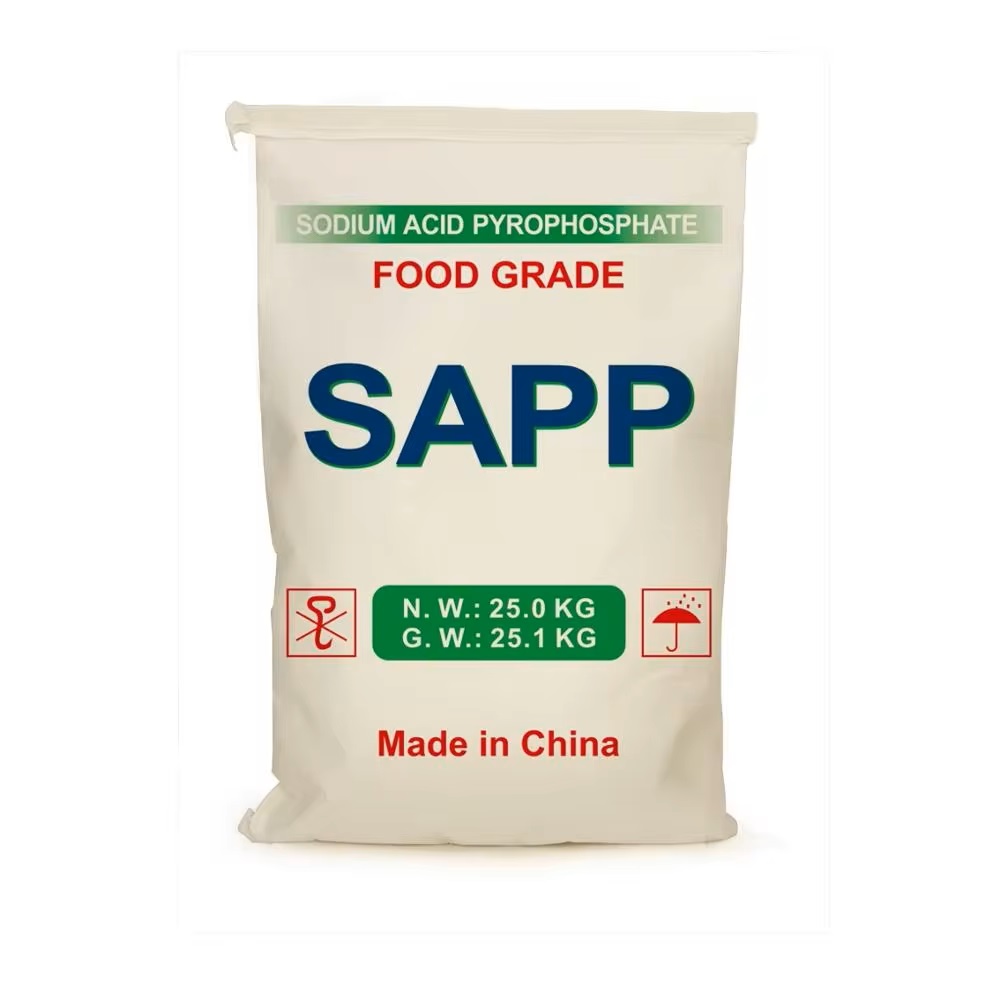
Send EmailSodium Acid Pyrophosphate, Disodium Dihydrogen Pyrophosphate, Disodium Pyrophosphate, SAPP, E450i, 7758-16-9
SODIUM ACID PYROPHOSPHATE (SAPP)
PRODUCT IDENTIFIER INFORMATION
| Parameter | Information |
|---|---|
| Product Name | Sodium Acid Pyrophosphate (SAPP) |
| Chemical Name (IUPAC) | Disodium Dihydrogen Diphosphate |
| CAS Number | 7758-16-9 |
| EC Number (EINECS) | 231-835-0 |
| Food Additive Code | E450(i) |
| Molecular Formula | Na2H2P2O7 |
| Molecular Weight | 221.94 g/mol |
SECTION 1: CHEMICAL IDENTITY AND DESCRIPTION
| Parameter | Information |
|---|---|
| Chemical Name (IUPAC) | Disodium Dihydrogen Diphosphate |
| Systematic Name | Diphosphoric Acid, Disodium Salt; Pyrophosphoric Acid, Disodium Salt |
| Synonyms | Sodium Acid Pyrophosphate, Disodium Pyrophosphate, Disodium Dihydrogen Diphosphate, Disodium Dihydrogen Pyrophosphate, SAPP, Disodium Diphosphate |
| Abbreviations | SAPP |
| CAS Number | 7758-16-9 |
| EC Number (EINECS) | 231-835-0 |
| Food Additive Code | E450(i) |
| INS Number | 450(i) |
| Molecular Formula | Na2H2P2O7 |
| Molecular Weight | 221.94 g/mol |
| Chemical Class | Inorganic acid phosphate salt (pyrophosphate/diphosphate) |
| Physical State (20°C) | Solid (white crystalline powder or granules; lumpy structure) |
| Odor | Odorless |
| Taste | Slightly acidic, characteristic |
SECTION 2: PHYSICAL AND CHEMICAL PROPERTIES
| Property | Value | Test Method |
|---|---|---|
| Appearance | White crystalline powder or granules; lumpy structure | Visual |
| Odor | Odorless | Olfactometric |
| Taste | Slightly acidic, characteristic | Sensory |
| Molecular Weight | 221.94 g/mol | Calculated |
| Melting Point | >600°C (decomposes) | DSC |
| Density (25°C) | 1.1 – 1.3 g/cm3 | ASTM D4052 |
| pH (1% solution, 25°C) | 3.7 – 5.0 (acidic) | pH Meter |
| Solubility in Water (0°C) | ~11.9 g/100 mL | Gravimetric |
| Solubility in Water (25°C) | ~14-15 g/100 mL (moderately soluble) | Gravimetric |
| Hygroscopicity | Low | Visual |
| Stability | Stable under normal conditions; artificial and stable | |
| Flash Point | Non-flammable | Not applicable |
SECTION 3: CHEMICAL PROPERTIES AND REACTIVITY
| Parameter | Information |
|---|---|
| Chemical Character | Acidic phosphate salt; leavening agent; chelating agent; pH regulator |
| Stability | Stable under normal conditions |
| Decomposition Products (Heating) | Above 600°C: Na2O, P2O5, phosphorus oxides, water vapor |
| Incompatible Materials | Strong oxidizing agents, strong bases |
| Reaction with Acids | Hydrolyzes to orthophosphates |
| Reaction with Bases | Neutralizes; converts to disodium phosphate and trisodium phosphate |
| Chelation | Binds Ca2+, Mg2+, Fe2+/Fe3+ ions |
| Leavening Reaction | Reacts with sodium bicarbonate (NaHCO3) releasing CO2 gas |
| Hazardous Polymerization | Does not occur |
SECTION 4: PYROPHOSPHATE TYPES COMPARISON
| Property | SAPP (E450i) | TSPP (E450iii) |
|---|---|---|
| Compound | Sodium Acid Pyrophosphate | Tetrasodium Pyrophosphate |
| Formula | Na2H2P2O7 | Na4P2O7 |
| pH (1% solution) | 3.7 – 5.0 (acidic) | 9.8 – 10.5 (alkaline) |
| Character | Acidic | Alkaline |
| Solubility in Water | ~14-15 g/100 mL | ~7 g/100 mL |
| P2O5 Content | ~64% | ~53% |
| Primary Use | Leavening agent, food, color preservative | Toothpaste, detergent, food |
SECTION 5: FUNCTIONAL PROPERTIES AND MECHANISM OF ACTION
| Property | Description |
|---|---|
| Leavening Agent | Reacts with sodium bicarbonate to release controlled CO2 gas; provides dough rising |
| pH Regulator | Lowers and balances pH in foods with its acidic character |
| Chelation / Sequestration | Binds metal ions (Ca2+, Mg2+, Fe2+/Fe3+); removes water hardness; prevents color darkening |
| Water Retention | Increases water holding capacity in cooked meat products; reduces cooking loss |
| Color Preservative | Prevents darkening in foods containing polyvalent metal ions such as potatoes |
| Buffering | Provides buffering capacity in acidic pH range |
| Dispersant | Dispersion agent in oil drilling muds and cleaning products |
| Stabilizer | Increases stability in food formulations |
SECTION 6: PRIMARY APPLICATION AREAS
| Sector / Application | Use | Typical Concentration / Dosage |
|---|---|---|
| Bakery - Cakes, Wafers, Batters | Leavening agent (with NaHCO3) | 0.2 – 0.5% |
| Bakery - Refrigerated Dough | Controlled CO2 release | 0.2 – 0.5% |
| Food - Canned Seafood | Buffering, chelation | 0.1 – 0.3% |
| Food - Frozen Fish Fillets | Water retention, texture preservation | 0.1 – 0.3% |
| Food - Frozen Shellfish | Buffering, chelation | 0.1 – 0.3% |
| Food - Potato Products | Sequestration (preventing darkening) | 0.1 – 0.5% |
| Food - Sausage Meat Products | Coloring, water retention, firming | 0.1 – 0.5% |
| Food - Crab Meat Processing | Increasing cutting strength, reducing cooking loss | 0.1 – 0.5% |
| Food - Chicken Carcass | Shelf life extension (1-2 days) | 0.1 – 0.5% |
| Pharmaceutical - Kidney Stone Prevention | Formulation component | Formulation dependent |
| Pharmaceutical - Skin Treatment | Formulation component | Formulation dependent |
| Cleaning - Carpet Shampoo | Alkaline chemical with SLS | 1 – 5% |
| Dairy Industry | Cleaning with Sulfamic Acid | 1 – 5% |
| Leather Processing | Iron stain removal | 1 – 3% |
| Oil Drilling | Dispersant, mud additive | Variable |
SECTION 7: QUALITY SPECIFICATIONS (FOOD GRADE - E450i)
| Parameter | Specification | Test Method |
|---|---|---|
| Appearance | White crystalline powder or granules | Visual |
| Odor | Odorless | Olfactometric |
| Purity (Na2H2P2O7, Dry Basis) | ≥ 95.0% | Titrimetric / Ion Chromatography |
| P2O5 Content | 63.0 – 65.0% | Gravimetric (Phosphomolybdate) |
| Loss on Drying (105°C, 2 hours) | ≤ 1.0% | Gravimetric |
| pH (1% solution, 25°C) | 3.7 – 5.0 | pH Meter |
| Water Insoluble Matter | ≤ 0.2% | Gravimetric |
| Fluoride (F-) | ≤ 10 ppm | Ion Selective Electrode |
| Chloride (Cl-) | ≤ 0.05% | Argentometric |
| Sulfate (SO4 2-) | ≤ 0.05% | Turbidimetric |
| Heavy Metals (as Pb) | ≤ 10 ppm | ICP-MS |
| Lead (Pb) | ≤ 2 ppm | ICP-MS |
| Arsenic (As) | ≤ 3 ppm | ICP-MS |
| Mercury (Hg) | ≤ 1 ppm | ICP-MS |
| Cadmium (Cd) | ≤ 1 ppm | ICP-MS |
| Iron (Fe) | ≤ 50 ppm | AAS / Colorimetric |
| Total Microbial Count | ≤ 1,000 CFU/g | ISO 4833 |
| Yeast and Mold | ≤ 100 CFU/g | ISO 21527 |
| E. coli | Negative in 10g | ISO 16649 |
| Salmonella spp. | Negative in 25g | ISO 6579 |
SECTION 8: TOXICOLOGICAL PROFILE
| Parameter | Value |
|---|---|
| Acute Oral Toxicity (LD50, Rat) | > 2,000 mg/kg |
| Acute Dermal Toxicity (LD50, Rabbit) | > 2,000 mg/kg |
| Skin Irritation | Mild irritant |
| Eye Irritation | Irritant |
| Respiratory Irritation | Inhalation of dust may cause mechanical irritation |
| Carcinogenicity | Not classified |
| Mutagenicity | Negative in in vitro tests |
| Reproductive Toxicity | No known adverse effects |
| ADI (Total Phosphate) | 0-70 mg/kg body weight/day (JECFA) |
SECTION 9: GHS CLASSIFICATION AND LABELING
GHS Classification (compliant with 1272/2008/EC):
| Hazard Class | Category | H-Statement |
|---|---|---|
| Skin Irritation | Category 2 | H315 |
| Eye Irritation | Category 2 | H319 |
| STOT - SE | Category 3 | H335 |
Signal Word: WARNING
Hazard Pictograms: GHS07 (Exclamation Mark)
Hazard Statements (H-Codes):
| Code | Statement |
|---|---|
| H315 | Causes skin irritation |
| H319 | Causes serious eye irritation |
| H335 | May cause respiratory irritation |
Precautionary Statements (P-Codes):
| Code | Statement |
|---|---|
| P261 | Avoid breathing dust |
| P280 | Wear protective gloves/eye protection |
| P302+P352 | IF ON SKIN: Wash with plenty of water and soap |
| P305+P351+P338 | IF IN EYES: Rinse cautiously with water for several minutes |
SECTION 10: FIRST AID MEASURES
| Exposure Route | Action to Take |
|---|---|
| Inhalation | Move to fresh air. Seek medical attention if respiratory irritation persists. |
| Skin Contact | Wash with plenty of water and soap for at least 15 minutes. Seek medical attention if irritation persists. |
| Eye Contact | Rinse immediately with plenty of water for at least 15 minutes. Remove contact lenses if present. Seek medical attention. |
| Ingestion | Rinse mouth with water. Drink plenty of water. Seek medical attention if you feel unwell. |
SECTION 11: FIREFIGHTING MEASURES
| Parameter | Information |
|---|---|
| Fire Hazard | Non-flammable |
| Hazards During Fire | Above 600°C: Na2O, P2O5, phosphorus oxides |
| Suitable Extinguishing Media | Any extinguishing media appropriate for surrounding fire |
| Special Protective Equipment | Self-contained breathing apparatus (SCBA), full protective clothing |
SECTION 12: STORAGE AND SHELF LIFE
| Parameter | Information |
|---|---|
| Storage Conditions | Cool (15-25°C), dry, well-ventilated area |
| Container Requirements | Tightly closed, moisture-proof containers |
| Keep Away From | Moisture, strong oxidizing agents, strong bases |
| Shelf Life | 24 months (unopened original packaging under appropriate storage conditions) |
| Stability Note | Stable under normal conditions; artificial and stable |
SECTION 13: PACKAGING OPTIONS
| Packaging Type | Quantity | Material |
|---|---|---|
| Kraft bag with PE inner liner | 25 kg | Kraft paper + PE |
| PP woven bag with PE inner liner | 25 kg | PP woven + PE |
| Big-Bag | 500-1000 kg | Polypropylene (with PE inner liner) |
| Plastic pail | 25 kg | HDPE |
SECTION 14: TRANSPORTATION INFORMATION
| Parameter | Information |
|---|---|
| UN Number | Not regulated (not hazardous) |
| Hazard Class | Not applicable |
| ADR/RID | Not regulated |
| IMDG Code | Not regulated |
| IATA (Air) | Not regulated |
| Marine Pollutant | No |
| Transport Temperature | Ambient; protect from moisture |
SECTION 15: REGULATORY STATUS
| Region / Authority | Status |
|---|---|
| European Union | Food additive E450(i); approved for use quantum satis |
| USA (FDA) | GRAS; approved as food additive |
| JECFA (FAO/WHO) | ADI: 0-70 mg/kg body weight/day (total phosphate) |
| Turkey | Approved under Turkish Food Codex Regulation on Food Additives |
| Halal / Kosher | Available |
| Vegetarian/Vegan | Suitable (inorganic source) |
SECTION 16: OTHER NAMES AND SYNONYMS
| Type | Name |
|---|---|
| Common Names | Sodium Acid Pyrophosphate, Disodium Pyrophosphate, Disodium Dihydrogen Diphosphate, SAPP |
| Food Additive Code | E450(i), INS 450(i) |
| CAS Number | 7758-16-9 |
| EC Number | 231-835-0 |
SECTION 17: SUMMARY TABLE
| Parameter | Value |
|---|---|
| Product | Sodium Acid Pyrophosphate (SAPP) |
| CAS Number | 7758-16-9 |
| Food Additive Code | E450(i) |
| Molecular Formula | Na2H2P2O7 |
| Molecular Weight | 221.94 g/mol |
| Appearance | White crystalline powder or granules |
| pH (1% solution) | 3.7 – 5.0 |
| Solubility in Water (25°C) | ~14-15 g/100 mL |
| Primary Function | Leavening agent, pH regulator, chelating agent, color preservative |
| Shelf Life | 24 months |
| GHS Signal Word | Warning |
SECTION 18: CRITICAL WARNINGS AND BEST PRACTICES
CRITICAL WARNINGS:
-
Acidic pH: 1% solution pH 3.7-5.0; may cause skin and eye irritation. Use protective equipment.
-
Leavening Reaction: Reacts with sodium bicarbonate releasing CO2 gas; may build pressure in closed containers.
-
Shelf Life: Approximately 2 years; loses functionality after this period. Pay attention to expiration date.
BEST PRACTICE RECOMMENDATIONS:
-
Bakery: Use at 0.2-0.5% with NaHCO3 as leavening agent; ideal for controlled CO2 release.
-
Food Preservation: Use at 0.1-0.5% to prevent darkening in potatoes and seafood.
-
Meat Processing: Use at 0.1-0.5% for water retention and color preservation.
-
Storage: Store in dry environment in tightly closed containers.
LEGAL DISCLAIMER:
The information provided in this document is presented in good faith based on our current knowledge and experience; however, since all usage conditions are beyond our control, it does not constitute a binding specification or warranty. This Technical Data Sheet is for informational purposes only. Users are obligated to test the suitability for their own applications. For complete safety, storage, handling, transportation, disposal, and regulatory compliance information, refer to the official Safety Data Sheet (SDS/MSDS) provided by the manufacturer/supplier.