We unleash your business potential by maximize the business innovation.
Send EmailSodium Cyclamate, Sodium Cyclohexylsulfamate, Sodium N-Cyclohexylsulfamate, E952, 139-05-9
SODIUM CYCLAMATE
PRODUCT IDENTIFIER INFORMATION
| Parameter | Information |
|---|---|
| Product Name | Sodium Cyclamate |
| Chemical Name (IUPAC) | Sodium N-Cyclohexylsulfamate |
| CAS Number | 139-05-9 |
| EC Number (EINECS) | 205-348-9 |
| Food Additive Code | E952(iv) |
| Molecular Formula | C₆H₁₂NNaO₃S |
| Molecular Weight | 201.22 g/mol |
SECTION 1: CHEMICAL IDENTITY AND DESCRIPTION
| Parameter | Information |
|---|---|
| Chemical Name (IUPAC) | Sodium N-Cyclohexylsulfamate |
| Systematic Name | Cyclamic Acid Sodium Salt; Cyclohexylsulfamic Acid Sodium Salt |
| Synonyms | Sodium Cyclamate, Sodium Cyclohexylsulfamate, Sodium N-Cyclohexylsulfamate, Sodium Sucaryl, Sucaryl Sodium, Beet Sugar Molasses |
| Trade Names | Sucaryl, Assugrin, Sugarin, Sucrosa |
| CAS Number | 139-05-9 |
| EC Number (EINECS) | 205-348-9 |
| Food Additive Code | E952(iv) |
| INS Number | 952(iv) |
| Molecular Formula | C₆H₁₂NNaO₃S |
| Molecular Weight | 201.22 g/mol |
| Chemical Class | Artificial sweetener; organic sulfamate salt |
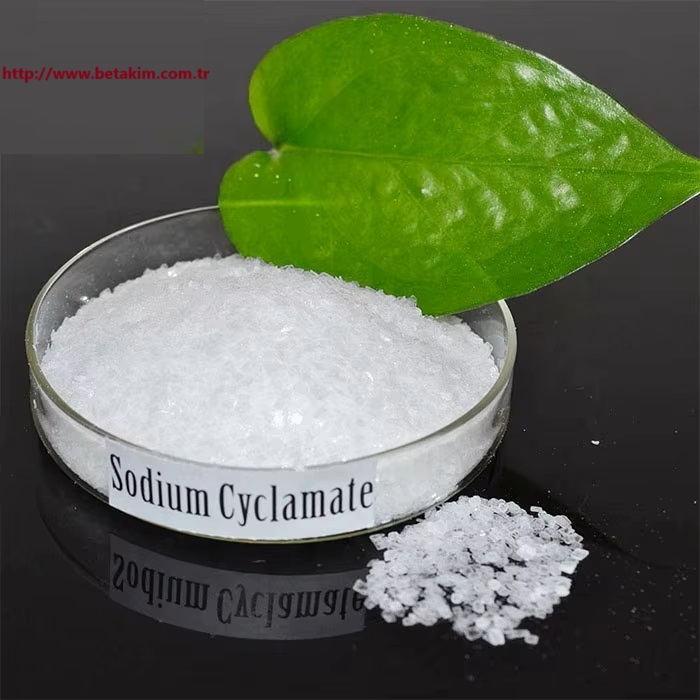
| Physical State (20°C) | Solid (white crystalline powder or white powder) |
| Odor | Odorless |
| Taste | Sweet (30-50 times sweeter than sucrose); least sweet among artificial sweeteners |
SECTION 2: PHYSICAL AND CHEMICAL PROPERTIES
| Property | Value | Test Method |
|---|---|---|
| Appearance | White crystalline powder or white powder | Visual |
| Odor | Odorless | Olfactometric |
| Taste | Sweet; 30-50 times sweeter than sucrose | Sensory |
| Molecular Weight | 201.22 g/mol | Calculated |
| Melting Point | >300°C | DSC |
| Density (20°C) | 1.58 g/cm³ | ASTM D4052 |
| pH (100 g/L solution, 20°C) | 5.5 – 7.5 | pH Meter |
| Solubility in Water (20°C) | 10 g/100 mL (freely soluble) | Gravimetric |
| Solubility in Ethanol | Slightly soluble | General Method |
| Solubility in Organic Solvents | Practically insoluble | General Method |
| Sweetness Relative to Sucrose | 30 – 50x | Sensory |
| Stability | Stable under normal conditions; non-hygroscopic | |
| Flash Point | Non-flammable | Not applicable |
SECTION 3: CHEMICAL PROPERTIES AND REACTIVITY
| Parameter | Information |
|---|---|
| Chemical Character | Artificial sweetener; organic sulfamate salt; non-nutritive |
| Stability | Stable under normal conditions; stable at high temperatures (baking) |
| Decomposition Products (Heating) | >300°C: CO, CO₂, NOx, SOx, Na₂O |
| Incompatible Materials | Strong oxidizing agents, strong acids |
| Reaction with Acids | May hydrolyze under strongly acidic conditions |
| Taste Mechanism | Interacts with T1R3 transmembrane domain of sweet taste receptors |
| Synergy | Exhibits synergistic sweetness enhancement with other artificial sweeteners (saccharin, sucralose, aspartame) |
| Hazardous Polymerization | Does not occur |
SECTION 4: ARTIFICIAL SWEETENERS COMPARISON
| Property | Sodium Cyclamate (E952) | Saccharin (E954) | Sucralose (E955) | Aspartame (E951) | Acesulfame K (E950) |
|---|---|---|---|---|---|
| CAS Number | 139-05-9 | 128-44-9 | 56038-13-2 | 22839-47-0 | 55589-62-3 |
| Sweetness (Sucrose=1) | 30-50x | 300-500x | 600x | 200x | 200x |
| Caloric Value | 0 kcal/g | 0 kcal/g | 0 kcal/g | 4 kcal/g | 0 kcal/g |
| Heat Stability | Excellent | Excellent | Excellent | Limited (degrades) | Excellent |
| Aftertaste | Minimal | Bitter/metallic | Minimal | Clean sweet | Minimal |
| ADI (mg/kg bw/day) | 0-7 (JECFA) | 0-5 (JECFA) | 0-15 (JECFA) | 0-40 (JECFA) | 0-15 (JECFA) |
| EU Status | Approved (E952) | Approved (E954) | Approved (E955) | Approved (E951) | Approved (E950) |
| USA Status | Not approved (banned since 1969) | Approved | Approved | Approved | Approved |
SECTION 5: FUNCTIONAL PROPERTIES AND MECHANISM OF ACTION
| Property | Description |
|---|---|
| Non-Nutritive Sweetener | Provides sweet taste without calories; suitable for diabetic and low-calorie products |
| Sugar Substitute | 30-50 times sweeter than sucrose; used at very low concentrations |
| Heat Stable | Stable at high temperatures; suitable for baking and cooking applications |
| Synergistic Sweetener | Exhibits sweetness synergy when blended with saccharin, sucralose, or aspartame |
| Taste Masking | Masks bitter aftertaste of other sweeteners (especially saccharin) |
| Non-Cariogenic | Does not promote tooth decay; suitable for sugar-free oral care products |
| Highly Soluble | Freely soluble in water; easy to incorporate into liquid formulations |
| Cost-Effective | Lower cost compared to other high-intensity sweeteners |
SECTION 6: PRIMARY APPLICATION AREAS
| Sector / Application | Use | Typical Dosage / Concentration |
|---|---|---|
| Food - Soft Drinks | Sweetener (often blended with saccharin) | 200 – 500 mg/L |
| Food - Tabletop Sweeteners | Tablets, powder, liquid sweetener | Formulation dependent |
| Food - Jams, Jellies, Marmalades | Sweetener | 500 – 2,000 mg/kg |
| Food - Canned Fruits | Sweetener (candied chestnuts, orange peel, canned plums) | 500 – 2,000 mg/kg |
| Food - Pickles | Sweet taste enhancer | 200 – 1,000 mg/kg |
| Food - Confectionery | Sweetener | 500 – 2,000 mg/kg |
| Food - Bakery Products | Heat-stable sweetener | 500 – 1,500 mg/kg |
| Pharmaceutical - Syrups, Suspensions | Sweetener, taste masking | 200 – 1,000 mg/L |
| Pharmaceutical - Chewable Tablets | Sweetener | 100 – 500 mg/tablet |
| Cosmetic - Oral Care (Mouthwash, Toothpaste) | Sweetener, non-cariogenic | 0.1 – 1.0% |
| Cosmetic - Lip Products | Sweetener | 0.1 – 0.5% |
SECTION 7: QUALITY SPECIFICATIONS (FOOD GRADE - E952iv)
| Parameter | Specification | Test Method |
|---|---|---|
| Appearance | White crystalline powder | Visual |
| Odor | Odorless | Olfactometric |
| Purity (C₆H₁₂NNaO₃S, Dry Basis) | ≥ 98.0% | Titrimetric / HPLC |
| Loss on Drying (105°C, 2 hours) | ≤ 1.0% | Gravimetric |
| pH (100 g/L solution, 20°C) | 5.5 – 7.5 | pH Meter |
| Sulfate (SO₄²⁻) | ≤ 0.1% | Turbidimetric |
| Chloride (Cl⁻) | ≤ 0.05% | Argentometric |
| Cyclohexylamine | ≤ 10 ppm | HPLC |
| Dicyclohexylamine | ≤ 2 ppm | HPLC |
| Aniline | ≤ 1 ppm | HPLC |
| Heavy Metals (as Pb) | ≤ 10 ppm | ICP-MS |
| Lead (Pb) | ≤ 2 ppm | ICP-MS |
| Arsenic (As) | ≤ 3 ppm | ICP-MS |
| Mercury (Hg) | ≤ 1 ppm | ICP-MS |
| Cadmium (Cd) | ≤ 1 ppm | ICP-MS |
| Total Microbial Count | ≤ 1,000 CFU/g | ISO 4833 |
| Yeast and Mold | ≤ 100 CFU/g | ISO 21527 |
| E. coli | Negative in 10g | ISO 16649 |
| Salmonella spp. | Negative in 25g | ISO 6579 |
SECTION 8: TOXICOLOGICAL PROFILE
| Parameter | Value |
|---|---|
| Acute Oral Toxicity (LD50, Rat) | > 5,000 mg/kg (very low toxicity) |
| Skin Irritation | Not irritating |
| Eye Irritation | Mild mechanical irritation (dust) |
| Carcinogenicity | Not classified as carcinogenic (IARC, NTP) |
| Mutagenicity | Negative in standard tests (Ames test) |
| Reproductive Toxicity | No adverse effects at permitted levels |
| ADI (Acceptable Daily Intake) | 0-7 mg/kg body weight/day (JECFA, 2003) |
| Cyclohexylamine Concern | Metabolite cyclohexylamine may be formed by gut bacteria in some individuals |
| EU Status | Approved; ADI 0-7 mg/kg bw/day (EFSA) |
| USA Status | Banned by FDA since 1969 (under review) |
SECTION 9: GHS CLASSIFICATION AND LABELING
GHS Classification (compliant with 1272/2008/EC):
| Hazard Class | Category | H-Statement |
|---|---|---|
| Not classified | - | Not classified as hazardous according to current regulations |
Signal Word: No signal word (not classified as hazardous)
Hazard Pictograms: No pictograms required
Precautionary Statements:
| Code | Statement |
|---|---|
| P261 | Avoid breathing dust |
| P280 | Wear protective goggles (in dusty environments) |
| P305+P351+P338 | IF IN EYES: Rinse cautiously with water for several minutes |
SECTION 10: FIRST AID MEASURES
| Exposure Route | Action to Take |
|---|---|
| Inhalation | Move to fresh air. Seek medical attention if respiratory irritation persists. |
| Skin Contact | Wash with plenty of water and soap. |
| Eye Contact | Rinse immediately with plenty of water for at least 15 minutes. Remove contact lenses if present. Seek medical attention if irritation persists. |
| Ingestion | Rinse mouth with water. Drink plenty of water. Seek medical attention if you feel unwell. |
SECTION 11: FIREFIGHTING MEASURES
| Parameter | Information |
|---|---|
| Fire Hazard | Non-flammable |
| Hazards During Fire | Above 300°C: CO, CO₂, NOx, SOx, Na₂O |
| Suitable Extinguishing Media | Any extinguishing media appropriate for surrounding fire |
| Special Protective Equipment | Self-contained breathing apparatus (SCBA), full protective clothing |
SECTION 12: STORAGE AND SHELF LIFE
| Parameter | Information |
|---|---|
| Storage Conditions | Cool (15-25°C), dry, well-ventilated area |
| Container Requirements | Tightly closed, moisture-proof containers |
| Keep Away From | Strong oxidizing agents, strong acids, moisture |
| Shelf Life | 36 months (unopened original packaging under appropriate storage conditions) |
| Stability Note | Stable under normal conditions; non-hygroscopic |
SECTION 13: PACKAGING OPTIONS
| Packaging Type | Quantity | Material |
|---|---|---|
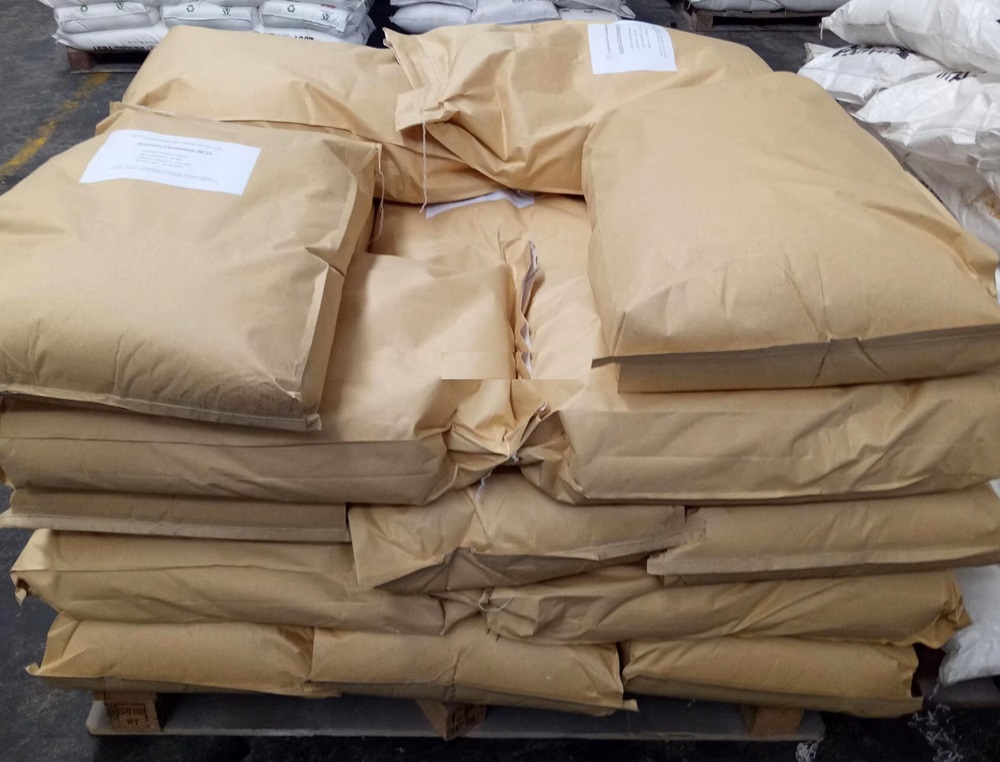
| Kraft bag with PE inner liner | 25 kg | Kraft paper + PE |
| PP woven bag with PE inner liner | 25 kg | PP woven + PE |
| Fiber drum | 25-50 kg | Fiberboard + PE |
| Big-Bag | 500-1000 kg | Polypropylene (with PE inner liner) |
SECTION 14: TRANSPORTATION INFORMATION
| Parameter | Information |
|---|---|
| UN Number | Not regulated (not hazardous) |
| Hazard Class | Not applicable |
| Packing Group | Not applicable |
| ADR/RID | Not regulated |
| IMDG Code | Not regulated |
| IATA (Air) | Not regulated |
| Marine Pollutant | No |
| Transport Temperature | Ambient; protect from moisture |
SECTION 15: REGULATORY STATUS
| Region / Authority | Status |
|---|---|
| European Union | Food additive E952(iv); approved with specific maximum levels |
| JECFA (FAO/WHO) | ADI: 0-7 mg/kg body weight/day |
| Codex Alimentarius | Listed in GSFA; INS 952(iv) |
| Turkey | Approved under Turkish Food Codex Regulation on Food Additives |
| USA (FDA) | NOT approved; banned since 1969 (under review for re-approval) |
| Canada | Approved with restrictions |
| Australia/New Zealand | Approved with specific limits |
| Halal / Kosher | Available |
SECTION 16: OTHER NAMES AND SYNONYMS
| Type | Name |
|---|---|
| Common Names | Sodium Cyclamate, Sodium Cyclohexylsulfamate, Sodium Sucaryl, Sucaryl Sodium |
| Chemical Names | Cyclamic Acid Sodium Salt, Cyclohexylsulfamic Acid Sodium Salt, Sodium N-Cyclohexylsulfamate |
| Trade Names | Sucaryl, Assugrin, Sugarin, Sucrosa |
| Food Additive Code | E952(iv), INS 952(iv) |
| CAS Number | 139-05-9 |
| EC Number | 205-348-9 |
SECTION 17: CYCLAMATE FORMS COMPARISON
| Property | Sodium Cyclamate (E952iv) | Calcium Cyclamate (E952ii) | Cyclamate-Saccharin Blend |
|---|---|---|---|
| Counter Ion | Na⁺ | Ca²⁺ | Na⁺ + Saccharin |
| Solubility in Water | Freely soluble (10 g/100mL) | Soluble | Freely soluble |
| Sweetness | 30x sucrose | 30x sucrose | Enhanced (synergy) |
| Sodium Content | Yes | No (low sodium) | Yes |
| Primary Use | General food, beverages | Low-sodium products | Tabletop sweeteners, soft drinks |
| Aftertaste | Minimal | Minimal | Reduced (saccharin aftertaste masked) |
SECTION 18: SWEETENER SYNERGY TABLE
| Sweetener Blend | Typical Ratio | Synergy Effect |
|---|---|---|
| Cyclamate + Saccharin | 10:1 | Masks saccharin bitterness; enhances sweetness |
| Cyclamate + Sucralose | 5:1 | Rounded sweetness profile |
| Cyclamate + Aspartame | 5:1 | Extended sweetness duration |
| Cyclamate + Acesulfame K | 5:1 | Improved sweetness onset |
SECTION 19: SUMMARY TABLE
| Parameter | Value |
|---|---|
| Product | Sodium Cyclamate |
| CAS Number | 139-05-9 |
| Food Additive Code | E952(iv) |
| Molecular Formula | C₆H₁₂NNaO₃S |
| Molecular Weight | 201.22 g/mol |
| Appearance | White crystalline powder |
| pH (100 g/L solution) | 5.5 – 7.5 |
| Sweetness (Sucrose=1) | 30-50x |
| Solubility in Water (20°C) | 10 g/100 mL |
| Primary Function | Non-nutritive artificial sweetener, sugar substitute |
| Shelf Life | 36 months |
| GHS Signal Word | Not classified |
SECTION 20: CRITICAL WARNINGS AND BEST PRACTICES
CRITICAL WARNINGS:
-
USA Ban: Not approved for use in the United States (banned by FDA since 1969). Check local regulations before use.
-
Cyclohexylamine Metabolism: Some individuals may metabolize cyclamate to cyclohexylamine via gut bacteria; this is the basis for the USA ban.
-
ADI Limit: Adhere to ADI of 0-7 mg/kg body weight/day as established by JECFA and EFSA.
-
Phenylketonuria (PKU): Unlike aspartame, cyclamate does not contain phenylalanine and is safe for PKU patients.
-
Not a Bulking Agent: Unlike sugar, cyclamate provides no bulk or texture; may require bulking agents in solid formulations.
BEST PRACTICE RECOMMENDATIONS:
-
Synergistic Blending: Use in combination with saccharin (10:1 ratio) for optimal taste profile and cost-effectiveness.
-
Dosage Control: Typical usage 200-2,000 mg/kg depending on application; calculate based on desired sweetness level.
-
Heat Stability: Suitable for baking and cooking applications; stable at high temperatures.
-
Liquid Formulations: Pre-dissolve in water before adding to formulations for homogeneous distribution.
-
Labeling: Always declare as E952(iv) or Sodium Cyclamate on product labels per local regulatory requirements.
LEGAL DISCLAIMER:
The information provided in this document is presented in good faith based on our current knowledge and experience; however, since all usage conditions are beyond our control, it does not constitute a binding specification or warranty. This Technical Data Sheet is for informational purposes only. Users are obligated to test the suitability for their own applications. For complete safety, storage, handling, transportation, disposal, and regulatory compliance information, refer to the official Safety Data Sheet (SDS/MSDS) provided by the manufacturer/supplier.