We unleash your business potential by maximize the business innovation.
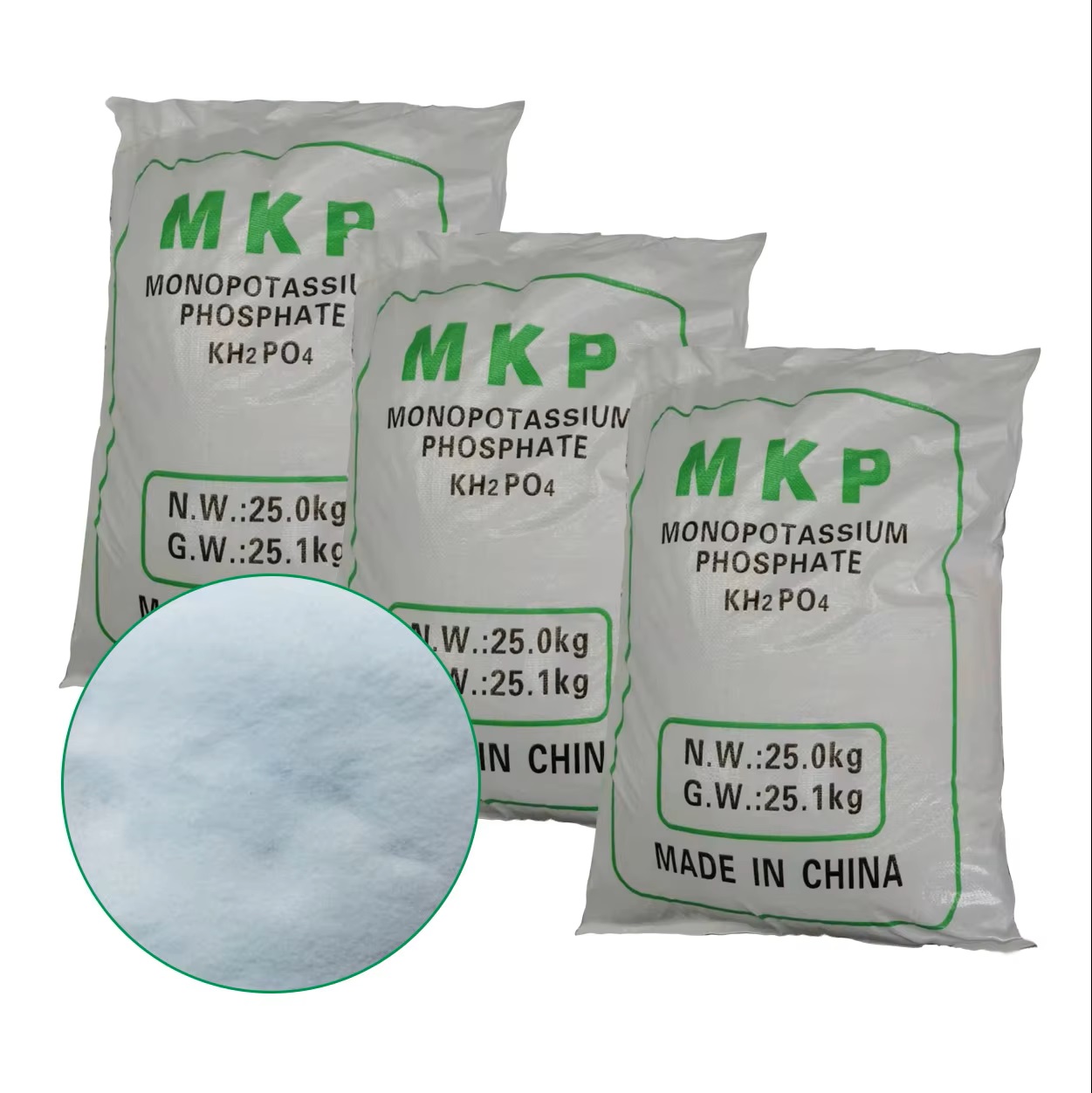
Send EmailMono Potassium Phosphate, Potassium Dihydrogen Phosphate, E340i, MKP, 7778-77-0, 7778-78-0
MONOPOTASSIUM PHOSPHATE – MONO POTASYUM FOSFAT
CAS Number: 7778-77-0 (Monobasic), 7778-78-0 (Dihydrogen)
EC Number (EINECS): 231-913-4
Molecular Formula: KH₂PO₄
Molecular Weight: 136.09 g/mol
E Number: E340(i)
SECTION 1: CHEMICAL IDENTITY AND DEFINITION
| Parameter | Information |
|---|---|
| Chemical Name (IUPAC) | Potassium dihydrogen phosphate |
| Other Names | Monopotassium Phosphate, MKP, Potassium Phosphate Monobasic, Potassium Dihydrogen Phosphate, Phosphoric Acid Monopotassium Salt, Potassium Acid Phosphate, Potassium Dihydrogen Orthophosphate, Orthophosphoric Acid Monopotassium Salt |
| Chemical Formula | KH₂PO₄ |
| Molecular Weight | 136.09 g/mol |
| CAS Number (Monobasic) | 7778-77-0 |
| CAS Number (Dihydrogen) | 7778-78-0 |
| EC Number (EINECS) | 231-913-4 |
| E Number | E340(i) (Acidity regulator, buffering agent) |
| Chemical Class | Inorganic potassium salt (phosphate) |
| Appearance | White crystalline powder or colorless crystals |
| Odor | Odorless |
| Physical State (20°C) | Solid (crystalline powder) |
SECTION 2: PHYSICAL PROPERTIES
| Property | Value |
|---|---|
| Appearance | White crystalline powder or colorless crystals |
| Odor | Odorless |
| Molecular Weight | 136.09 g/mol |
| Melting Point | 252.6 °C |
| Density (20°C) | 2.338 g/cm³ |
| Solubility in Water (20°C) | Soluble (25 g/100 g water) |
| Solubility in Hot Water | Highly soluble |
| Solubility in Ethanol | Insoluble |
| pH (1% solution) | 4.4 – 4.7 (acidic) |
| Bulk Density | ~1.2 – 1.4 g/cm³ |
| Hygroscopicity | Low |
SECTION 3: CHEMICAL PROPERTIES
| Property | Information |
|---|---|
| Chemical Formula | KH₂PO₄ |
| Molecular Weight | 136.09 g/mol |
| Chemical Class | Inorganic potassium salt (phosphate) |
| Structure | Monobasic potassium salt of phosphoric acid |
| SMILES | [K+].OP(=O)([O-])O |
| InChI Key | GNSKLFRGEWLPPA-UHFFFAOYSA-M |
| pH (1% solution) | 4.4 – 4.7 (acidic) |
| Buffering Capacity | High; effective in acidic pH range |
| Stability | Stable under normal storage conditions |
| Hygroscopicity | Low |
| Incompatible Materials | Strong acids, strong oxidizing agents, strong bases |
Chemical Structure:
    O
    ||
HO-P-OH
    |
    O⁻K⁺

(Potassium Dihydrogen Phosphate / KH₂PO₄)
SECTION 4: COMPARISON WITH OTHER POTASSIUM PHOSPHATES
| Property | MKP (KH₂PO₄) | DKP (K₂HPO₄) | TKP (K₃PO₄) |
|---|---|---|---|
| Chemical Formula | KH₂PO₄ | K₂HPO₄ | K₃PO₄ |
| Molecular Weight | 136.09 g/mol | 174.18 g/mol | 212.27 g/mol |
| pH (1% solution) | 4.4 – 4.7 | 8.7 – 9.4 | 11.5 – 12.0 |
| Potassium Ions | 1 | 2 | 3 |
| Acidity | Acidic | Alkaline | Highly alkaline |
| Solubility | Soluble | Soluble | Soluble |
| Primary Use | Fertilizer, buffer | Buffer, emulsifier | Buffer, emulsifier |
SECTION 5: TECHNICAL FUNCTIONALITY
| Property | Description |
|---|---|
| Primary Function | Buffering agent, nutrient source (potassium and phosphorus) |
| Secondary Function | Acidity regulator, neutralizing agent, sequestrant |
| Buffering Capacity | High; effective in acidic pH range (4.0-5.0) |
| Nutrient Source | Provides potassium (K) and phosphorus (P) |
| Chelating Effect | Acts as sequestering agent |
| Fertilizer Value | High solubility; readily available for plants |
| pH Control | Maintains stable pH in formulations |
SECTION 6: AGRICULTURE AND FERTILIZER APPLICATIONS
| Application | Function |
|---|---|
| Fertilizer | Provides potassium and phosphorus for plant growth |
| Water Soluble Fertilizer | High solubility in water; ideal for hydroponics and drip irrigation |
| Crop Nutrition | Essential for ATP and ADP formation; energy transport in plants |
| Rocket (Arugula) Production | Increases yield and growth in optimal conditions |
| Phosphorus Deficiency | Used to correct phosphorus deficiency in plants |
| Hydroponic Systems | Essential nutrient source |
SECTION 7: FOOD INDUSTRY APPLICATIONS (E340(i))
| Application | Function |
|---|---|
| Food Industry (General) | Acidity regulator, buffering agent, leavening agent |
| Fermentation Processes | Used in fermentation processes |
| Leavening Agent | Used in baking as leavening acid |
| Beverages | pH control; buffering agent |
| Dairy Products | Stabilizer; pH control |
| Meat Products | pH control; moisture retention |
| Processed Foods | pH regulator; emulsifier |
| Bakery Products | Improves dough quality |
SECTION 8: PHARMACEUTICAL AND MEDICAL APPLICATIONS
| Application | Function |
|---|---|
| Buffering Agent | Used as buffering agent in pharmaceutical formulations |
| Parenteral Nutrition | Used with amino acids and dextrose; balances calcium and phosphorus solubility |
| Mineral Balance | Used in parenteral nutrition for infants to maintain mineral balance |
| Potassium Source | Provides potassium; essential for intracellular cation role |
| Gastrointestinal Reflux | Used with sodium alginate and sodium bicarbonate for reflux esophagitis treatment |
| Dextrose Transport | Plays role in dextrose transport across cell membranes |
| Intravenous Solutions | Used in IV solutions for mineral supplementation |
| Cultivation Media | Primary component of culture media |
| Effervescent Tablets | Buffer; pH control |
SECTION 9: INDUSTRIAL APPLICATIONS
| Application | Function |
|---|---|
| Neutralizing Agent | Used as neutralizing agent in some applications |
| Sequestrant | Used as sequestering agent |
| Water Treatment | pH control; buffering |
| Industrial Cleaners | Buffering agent; pH control |
SECTION 10: QUALITY SPECIFICATIONS (FOOD GRADE)
| Parameter | Specification (FCC / USP / Ph. Eur.) |
|---|---|
| Appearance | White crystalline powder or colorless crystals |
| Identification | Positive (Potassium and Phosphate tests) |
| Assay (on dried basis) | 98.0 – 101.0% |
| pH (1% solution) | 4.4 – 4.7 |
| Loss on Drying | ≤ 0.2% |
| Chlorides (Cl) | ≤ 0.01% |
| Sulfates (SO₄) | ≤ 0.01% |
| Heavy Metals (as Pb) | ≤ 10 ppm |
| Lead (Pb) | ≤ 2 ppm |
| Arsenic (As) | ≤ 3 ppm |
| Mercury (Hg) | ≤ 1 ppm |
| Cadmium (Cd) | ≤ 1 ppm |
| Iron (Fe) | ≤ 20 ppm |
| Insoluble Matter | ≤ 0.1% |
| Sodium (Na) | ≤ 0.5% |
| Water Insoluble | ≤ 0.05% |
SECTION 11: MICROBIOLOGICAL SPECIFICATIONS
| Parameter | Specification |
|---|---|
| Total Aerobic Mesophilic Bacteria | ≤ 1,000 CFU/g |
| Yeast and Mold | ≤ 100 CFU/g |
| Salmonella spp. | Negative in 25g |
| Escherichia coli | Negative in 10g |
SECTION 12: STORAGE AND SHELF LIFE
| Parameter | Information |
|---|---|
| Storage Conditions | Cool (15-25°C), dry, well-ventilated area |
| Container Requirements | Tightly closed, original packaging |
| Protect From | Moisture, strong acids, strong oxidizing agents, strong bases |
| Shelf Life | 24-60 months (unopened original packaging) |
| Stability Note | Stable; non-hygroscopic |
SECTION 13: PACKAGING OPTIONS
| Packaging Type | Quantity | Material |
|---|---|---|
| PE-lined kraft paper bag | 25 kg | Kraft paper + PE |
| Plastic pail | 20-25 kg | HDPE |
| Fiber drum | 25-50 kg | HDPE + PE |
| Big-Bag | 500-1000 kg | Polypropylene (with PE liner) |
| Plastic bag | 25 kg | HDPE/LDPE |
SECTION 14: SAFETY AND HEALTH INFORMATION
GHS Classification (Bulk Powder)
| Hazard Class | Category |
|---|---|
| Eye Irritation | Category 2A (H319) |
| Signal Word | Warning |
Hazard Statements (H-Codes)
| Code | Statement |
|---|---|
| H319 | Causes serious eye irritation |
Precautionary Statements (P-Codes)
| Code | Statement |
|---|---|
| P261 | Avoid breathing dust |
| P280 | Wear protective gloves/eye protection |
| P305+P351+P338 | IF IN EYES: Rinse cautiously with water for several minutes; remove contact lenses if present and easy to do; continue rinsing |
SECTION 15: TOXICOLOGICAL INFORMATION
| Parameter | Value |
|---|---|
| Oral LD50 (Rat) | > 4,000 mg/kg |
| ADI (Acceptable Daily Intake) | Not specified (JECFA) |
| Carcinogenicity | Not classified |
| Mutagenicity | Negative in standard tests |
| GRAS Status | Yes (21 CFR 182.1752) |
SECTION 16: FIRST AID MEASURES
| Exposure Route | Action |
|---|---|
| Inhalation | Move to fresh air. If respiratory irritation persists, seek medical attention. |
| Skin Contact | Wash with plenty of soap and water. |
| Eye Contact | Rinse immediately with plenty of water for at least 15 minutes. Seek medical attention. |
| Ingestion | Rinse mouth. Drink plenty of water. Seek medical attention. |
SECTION 17: REGULATORY STATUS
| Region / Authority | Status |
|---|---|
| European Union | Approved as E340(i) |
| USA (FDA) | GRAS (21 CFR 182.1752) |
| Turkey | Approved (Turkish Food Codex) |
| JECFA (FAO/WHO) | Approved; ADI: Not specified |
| Codex Alimentarius | Approved (INS 340(i)) |
| FCC | Monograph available |
| USP | Monograph available |
| Ph. Eur. | Monograph available |
SECTION 18: TRANSPORT INFORMATION
| Parameter | Information |
|---|---|
| UN Number | Not regulated (not dangerous goods) |
| Hazard Class | Not applicable |
| Packing Group | Not applicable |
| ADR/RID | Not regulated |
| IMDG Code | Not regulated |
| IATA (Air) | Not regulated |
| Marine Pollutant | No |
SECTION 19: FIRE-FIGHTING MEASURES
| Parameter | Information |
|---|---|
| Fire Hazard | Non-combustible (inorganic salt) |
| Suitable Extinguishing Media | Water spray (mist), CO₂, dry chemical powder |
| Specific Hazards | When heated, emits phosphoric acid fumes, potassium oxide |
| Decomposition Products | P₂O₅, K₂O |
| Protective Equipment | Self-contained breathing apparatus (SCBA), full protective clothing |
SECTION 20: ACCIDENTAL SPILLAGE AND CLEANUP
| Parameter | Information |
|---|---|
| Personal Protection | Nitrile gloves, protective goggles, dust mask (N95) |
| Cleaning Methods | Sweep or vacuum; avoid dust generation |
| Environmental Precautions | Prevent entry into drains, soil, and surface waters |
| Waste Disposal | According to local regulations; landfilling at licensed facilities |
SECTION 21: OTHER NAMES AND SYNONYMS
| Type | Name |
|---|---|
| Turkish Names | Mono Potasyum Fosfat, Potasyum Dihidrojen Fosfat, MKP, Potasyum Fosfat Monobazik |
| English Names | Monopotassium Phosphate, MKP, Potassium Phosphate Monobasic, Potassium Dihydrogen Phosphate |
| Chemical Names | Phosphoric Acid Monopotassium Salt, Potassium Acid Phosphate, Potassium Dihydrogen Orthophosphate, Orthophosphoric Acid Monopotassium Salt |
| Abbreviation | MKP |
| E Number | E340(i) |
| CAS (Monobasic) | 7778-77-0 |
| CAS (Dihydrogen) | 7778-78-0 |
| EC Number | 231-913-4 |
SECTION 22: SUMMARY AND CRITICAL NOTES
Product Summary
| Parameter | Value |
|---|---|
| Product | Monopotassium Phosphate (MKP) |
| CAS Number | 7778-77-0 |
| E Number | E340(i) |
| Appearance | White crystalline powder |
| Molecular Weight | 136.09 g/mol |
| Primary Function | Fertilizer, buffering agent |
| pH (1% solution) | 4.4 – 4.7 |
Critical Notes
-
Primary Nutrient Source: MKP is a primary source of potassium and phosphorus for plant growth; highly soluble in water.
-
Acidic pH: 1% solution has pH 4.4-4.7; effective as acidic buffering agent.
-
High Buffering Capacity: Excellent buffering capacity in the acidic pH range (4.0-5.0).
-
Fertilizer Application: Used in agriculture as a water-soluble fertilizer for drip irrigation and foliar application.
-
E340(i): Listed as E340(i) under European food additive regulations.
-
Not to be Confused with DKP: Contains 1 potassium ion; different from Dipotassium Phosphate (K₂HPO₄) which has 2 potassium ions.
-
Food Applications: Used as acidity regulator, buffering agent, and leavening agent in food products.
-
Pharmaceutical Use: Used as buffering agent; important in parenteral nutrition for mineral balance.
-
GRAS Status: Approved by FDA as GRAS (21 CFR 182.1752).
-
Regulatory Status: Approved in EU (E340(i)), FDA, JECFA, and Turkish Food Codex.
IMPORTANT DECLARATION: This Technical Data Sheet (TDS) is for informational purposes only and has been prepared based on available technical data. The user is responsible for determining the product's suitability for their specific application and for complying with all local, national, and international regulations. For complete safety, storage, use, transport, waste, and regulatory compliance information, refer to the official Safety Data Sheet (SDS/MSDS) provided by the manufacturer/supplier.