We unleash your business potential by maximize the business innovation.
Send EmailMenthol, L-Menthol, DL-Menthol, Mentyl Alcohol, Peppermint Camphor, 15356-70-4, 1490-04-6, 2216-51-5
MENTHOL (MENTHOL)
Menthol / Mentyl Alcohol / L-Menthol / DL-Menthol / Peppermint Camphor
CAS Numbers: 2216-51-5 (L-Menthol); 1490-04-6 (DL-Menthol); 15356-70-4 (D-Menthol)
EC Numbers: 218-690-9 (L-Menthol); 208-759-1 (DL-Menthol); 239-389-9 (D-Menthol)
SECTION 1: PRODUCT IDENTIFICATION AND CHEMICAL IDENTITY
| Parameter | Information |
|---|---|
| Chemical Name (IUPAC) | 2-Isopropyl-5-methylcyclohexanol |
| Other Names | Menthol, Mentyl Alcohol, 3-p-Menthanol, Hexahydrothymol, Peppermint Camphor, Hexahydrothymol |
| Chemical Formula | C₁₀H₂₀O |
| Molecular Weight | 156.27 g/mol |
| Chemical Class | Cyclic terpene alcohol |
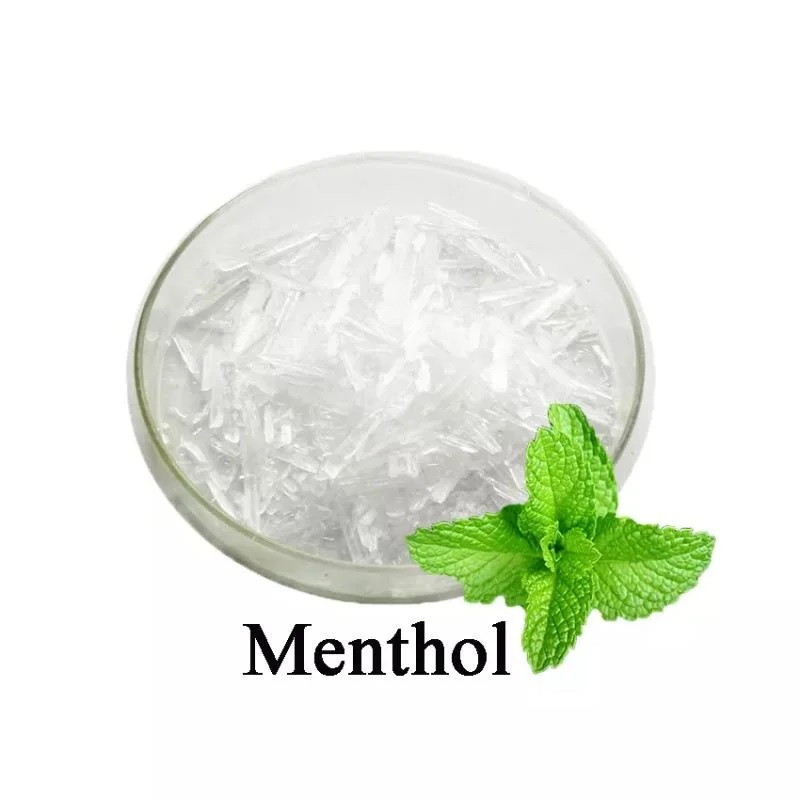
| Appearance | White to colorless, needle-like crystals |
| Odor | Characteristic, refreshing, minty, slightly sweet |
| Taste | Minty, burning, cooling |
| Physical State (20°C) | Solid (crystalline) |
Menthol is an organic compound belonging to the class of cyclic terpene alcohols, naturally found in the essential oils of mint (Mentha) species. It is known for its characteristic minty odor and cooling sensation. It is widely used in the food, pharmaceutical, cosmetic, and tobacco industries.
SECTION 2: ISOMERS AND CHEMICAL IDENTITY
| Isomer | CAS Number | EC Number | Melting Point | Description |
|---|---|---|---|---|
| L-Menthol (Levomenthol) | 2216-51-5 | 218-690-9 | 41 – 44 °C | Most abundant form in nature; characteristic cooling and refreshing properties; most commercially valuable form. |
| D-Menthol | 15356-70-4 | 239-389-9 | ~34-37 °C | Less common; bitter, non-minty, spicy, camphor-like taste. |
| DL-Menthol (Racemic) | 1490-04-6 | 208-759-1 | 34 – 38 °C | Equal mixture of L and D forms; weaker taste and odor profile; lower cost. |
| Neomenthol | - | - | ~40-45 °C | Isomer with different stereochemistry |
| Isomenthol | - | - | ~40-45 °C | Isomer with different stereochemistry |
| Neoisomenthol | - | - | ~40-45 °C | Isomer with different stereochemistry |
SECTION 3: CHEMICAL STRUCTURE
3.1. Molecular Structure
Menthol is a cyclohexanol derivative with three asymmetric carbon atoms. The molecule contains a cyclohexane ring with hydroxyl (-OH), methyl (-CH₃), and isopropyl (-CH(CH₃)₂) substituents.
Structural Formula:
        CH₃
         |
    CH₃-C
         |
     CH - C₆H₁₀ - OH
         |
        CH₃
More Detailed Representation (Cyclohexane Ring):
         OH
          |
     CH₃--C
          |
    (CH₃)₂CH-C
          |
         C₆H₁₀
3.2. Molecular Formula
C₁₀H₂₀O
3.3. Molecular Weight
156.27 g/mol
3.4. Key Structural Features
| Feature | Description |
|---|---|
| Functional Group | Hydroxyl (-OH) (alcohol) |
| Ring Structure | Cyclohexane (six-membered ring) |
| Substituents | Methyl (-CH₃), Isopropyl (-CH(CH₃)₂), Hydroxyl (-OH) |
| Stereochemistry | 3 asymmetric carbons; 8 possible stereoisomers |
| Optical Rotation (L-Menthol) | -45° to -51° [α]D²⁰ |
| Optical Rotation (DL-Menthol) | 0° (racemic) |
| SMILES | CC(C)C1CCC(C)CC1O |
| InChI Key | NOOLISFMXDJSKH-UHFFFAOYSA-N |
SECTION 4: PHYSICAL PROPERTIES
| Property | L-Menthol | DL-Menthol | D-Menthol |
|---|---|---|---|
| Appearance | White to colorless, needle-like crystals | White to colorless, needle-like crystals | White to colorless, needle-like crystals |
| Odor | Characteristic minty, refreshing | Characteristic minty (weaker) | Camphor-like, spicy |
| Melting Point | 41 – 44 °C | 34 – 38 °C | ~34 – 37 °C |
| Boiling Point | ~212 °C | ~212 °C | ~212 °C |
| Density (20°C) | 0.890 g/cm³ | 0.890 g/cm³ | 0.890 g/cm³ |
| Flash Point | 93 °C | 93 °C | 93 °C |
| Water Solubility (20°C) | ~0.4 g/L (very slight) | ~0.4 g/L (very slight) | ~0.4 g/L (very slight) |
| Ethanol Solubility | Highly soluble | Highly soluble | Highly soluble |
| Chloroform Solubility | Highly soluble | Highly soluble | Highly soluble |
| Ether Solubility | Highly soluble | Highly soluble | Highly soluble |
| Hexane Solubility | Highly soluble | Highly soluble | Highly soluble |
| Refractive Index (nD²⁰) | 1.459 – 1.462 | 1.459 – 1.462 | 1.459 – 1.462 |
| Optical Rotation [α]D²⁰ | -45° to -51° | 0° | ~+45° to +51° |
| Vapor Pressure (25°C) | ~0.8 mmHg | ~0.8 mmHg | ~0.8 mmHg |
| Sublimation | Sublimes at room temperature | Sublimes at room temperature | Sublimes at room temperature |
SECTION 5: SOLUBILITY PROFILE
| Solvent | Solubility | Conditions |
|---|---|---|
| Water | Very slightly soluble (~0.4 g/L) | 20°C |
| Ethanol | Highly soluble | 25°C |
| Chloroform | Highly soluble | 25°C |
| Ether | Highly soluble | 25°C |
| Hexane | Highly soluble | 25°C |
| Glacial Acetic Acid | Highly soluble | 25°C |
| Acetone | Soluble | 25°C |
| Benzene | Soluble | 25°C |
SECTION 6: CHEMICAL PROPERTIES AND REACTIVITY
| Property | Information |
|---|---|
| Chemical Character | Weakly acidic (alcohol) |
| Stability | Stable under normal storage conditions |
| Sublimation | Sublimes at room temperature (important!) |
| Reactivity | Sensitive to oxidation; undergoes esterification and etherification reactions |
| Incompatible Materials | Strong oxidizers, strong acids, strong bases |
| Oxidation | Slowly oxidizes in air to menthone and other products |
| Esterification | Forms esters with acids (menthyl acetate, menthyl salicylate) |
SECTION 7: REACTION EQUATIONS
7.1. Oxidation (to Menthone)
Menthol + [O] → Menthone + H₂O
7.2. Esterification (Menthyl Acetate)
Menthol + Acetic Acid ⇌ Menthyl Acetate + H₂O
7.3. Dehydration (to Menthene)
Menthol → Menthene + H₂O (with acid catalyst)
SECTION 8: MECHANISM OF ACTION (COOLING SENSATION)
| Parameter | Description |
|---|---|
| Primary Target | TRPM8 (Transient Receptor Potential Melastatin 8) ion channel |
| Location | Sensory neurons in skin and mucous membranes |
| Normal Activation | Activated at temperatures below 25°C |
| Menthol Effect | Lowers activation threshold to 30-35°C |
| Ion Flow | Calcium ions (Ca²⁺) flow into the neuron |
| Signal | Action potential is initiated; "cold" signal sent to the brain |
| Result | Cooling sensation without actual temperature change |
| Anesthetic Effect | Mild local anesthetic effect; tingling sensation |
SECTION 9: SOURCES AND PRODUCTION
9.1. Natural Sources
| Source | Description |
|---|---|
| Mentha arvensis (Cornmint) | Primary natural source; obtained by cold crystallization or distillation. |
| Mentha piperita (Peppermint) | High-quality menthol; essential oil extraction. |
| Mentha aquatica (Water Mint) | Lower menthol content. |
| Other Mentha Species | Variable menthol content. |
9.2. Production Methods
| Method | Description |
|---|---|
| Natural Extraction | Cold crystallization or distillation from mint essential oils. |
| Synthetic Production | Chemical synthesis from thymol, citronellal, or petroleum-derived compounds. |
| Natural vs. Synthetic | Natural menthol is more valuable, especially in food and aromatherapy. |
SECTION 10: FOOD INDUSTRY APPLICATIONS
| Application | Function |
|---|---|
| Chewing Gum | Flavoring agent; cooling sensation |
| Candy and Confectionery | Flavoring agent; mint flavor |
| Sugar-Free Products | Flavoring agent; cooling sensation |
| Soft Drinks | Flavoring agent; refreshing taste |
| Liqueurs | Flavoring agent |
| Dental Products (Edible) | Flavoring agent; freshness |
| Flavor Enhancer | Third most important flavor after vanilla and citrus |
SECTION 11: PHARMACEUTICAL AND MEDICAL APPLICATIONS
| Application | Function |
|---|---|
| Topical Analgesics | Muscle and joint pain; cooling effect; temporary anesthetic effect |
| Cough Syrups | Expectorant; soothes throat irritation |
| Cold Inhalers | Nasal decongestant; opens nasal passages |
| Chest Rubs | Decongestant effect |
| Oral and Dental Care | Freshness; prevents bad breath; soothes mouth ulcers |
| Throat Lozenges | Soothes throat irritation |
| Burn and Itch Creams | Cooling effect; reduces itching |
| Anti-itch Creams | Reduces itching |
| Migraine Treatment (Topical) | Cooling effect; alleviates pain |
SECTION 12: COSMETIC AND PERSONAL CARE APPLICATIONS
| Application | Function |
|---|---|
| Toothpastes | Flavoring agent; freshness |
| Mouthwashes | Flavoring agent; freshness |
| Dental Gels | Freshness; soothing effect |
| Shaving Lotions | Cooling; refreshing |
| Shower Gels | Cooling; refreshing |
| Shampoos | Cooling; anti-dandruff |
| Body Lotions | Cooling; refreshing |
| Foot Creams | Cooling; deodorizing |
| Deodorants | Cooling; refreshing |
| Sunscreens | Cooling effect in some formulations |
SECTION 13: OTHER INDUSTRIAL APPLICATIONS
| Application | Function |
|---|---|
| Tobacco Industry | Menthol cigarettes; reduces throat irritation; smoother smoking experience |
| Textile Industry | Microencapsulated menthol in sportswear; cooling effect |
| Perfumery and Fragrances | Fixative; fragrance component |
| Flavors | Flavor component |
SECTION 14: QUALITY SPECIFICATIONS
14.1. L-Menthol (USP / Ph. Eur. / FCC)
| Parameter | Specification |
|---|---|
| Appearance | White to colorless, needle-like crystals |
| Identification | Positive (Menthol tests) |
| Assay (on dry basis) | 98.0 – 101.0% |
| Melting Point | 41 – 44 °C |
| Optical Rotation [α]D²⁰ | -45° to -51° |
| Loss on Drying | ≤ 1.0% |
| Residue on Ignition | ≤ 0.1% |
| Heavy Metals (as Pb) | ≤ 10 ppm |
| Related Substances | ≤ 1.0% |
| Non-Volatile Residue | ≤ 0.05% |
14.2. DL-Menthol (Racemic)
| Parameter | Specification |
|---|---|
| Appearance | White to colorless, needle-like crystals |
| Melting Point | 34 – 38 °C |
| Optical Rotation | 0° (racemic) |
| Other Specifications | Same as L-Menthol |
SECTION 15: STORAGE AND SHELF LIFE
| Parameter | Information |
|---|---|
| Storage Conditions | Cool (15-25°C), dry, well-ventilated area |
| Container Requirements | Tightly closed, original packaging (sublimes) |
| Materials to Protect From | Sublimation, light, heat, strong oxidizers |
| Shelf Life | 24-60 months (in unopened original packaging) |
| Stability Note | Sublimes at room temperature; store in tightly closed containers |
SECTION 16: PACKAGING OPTIONS
| Packaging Type | Quantity | Material |
|---|---|---|
| Kraft Bag with PE Liner | 25 kg | Kraft paper + PE |
| Plastic Pail | 20-25 kg | HDPE |
| Aluminum Foil Bag | 1-5 kg | Laminated aluminum |
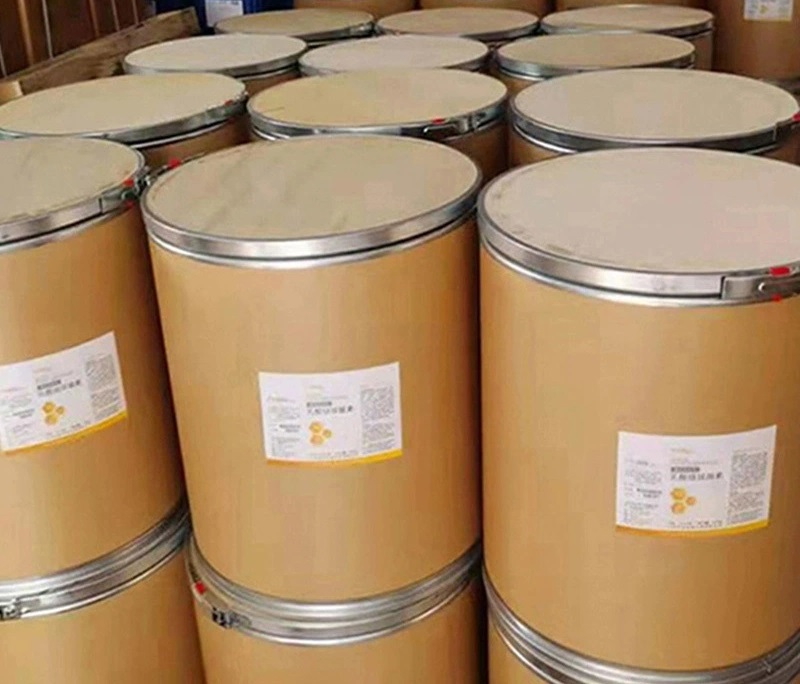
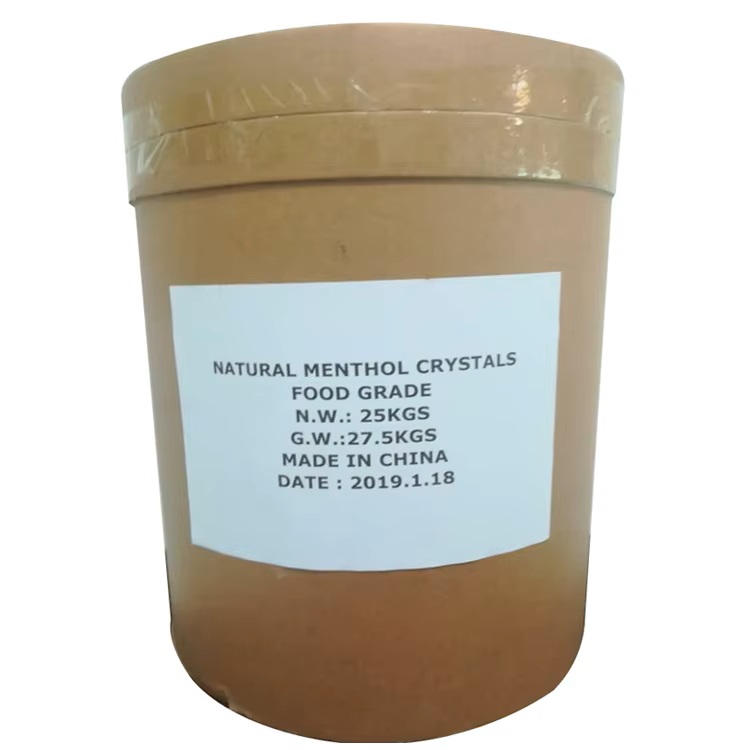
| Fiber Drum | 25-50 kg | HDPE + PE |
| Glass Bottle | 1-5 kg | Amber glass (for high purity) |
SECTION 17: SAFETY AND TOXICOLOGY
17.1. GHS Classification
| Hazard Class | Category | H-Statement |
|---|---|---|
| Skin Irritation | Category 2 | H315 |
| Eye Irritation | Category 2A | H319 |
| STOT - SE | Category 3 | H335 |
Signal Word: WARNING
Hazard Statements (H-Codes):
| Code | Statement |
|---|---|
| H315 | Causes skin irritation. |
| H319 | Causes serious eye irritation. |
| H335 | May cause respiratory irritation. |
17.2. Toxicological Information
| Parameter | Value |
|---|---|
| Acute Oral Toxicity (LD50, Rat) | ~3,300 mg/kg |
| Acute Dermal Toxicity (LD50, Rabbit) | > 5,000 mg/kg |
| Skin Sensitization | May cause sensitization in sensitive individuals |
| Carcinogenicity | Not classified |
| Mutagenicity | Negative in standard tests |
| GRAS Status (FDA) | Yes (21 CFR 172.230) |
SECTION 18: PRECAUTIONARY STATEMENTS (P-CODES)
| Code | Statement |
|---|---|
| P261 | Avoid breathing dust. |
| P280 | Wear protective gloves/protective clothing/eye protection/face protection. |
| P302+P352 | IF ON SKIN: Wash with plenty of soap and water. |
| P305+P351+P338 | IF IN EYES: Rinse cautiously with water for several minutes. Remove contact lenses if present. |
| P501 | Dispose of contents/container in accordance with local regulations. |
SECTION 19: FIRST AID MEASURES
| Route of Exposure | Action to Be Taken |
|---|---|
| Inhalation | Move to fresh air. If respiratory irritation persists, seek medical attention. |
| Skin Contact | Wash with plenty of soap and water. Remove contaminated clothing. |
| Eye Contact | Rinse thoroughly with plenty of water for at least 15 minutes. Seek medical attention. |
| Ingestion | Rinse mouth. Do not induce vomiting. Seek medical attention. |
SECTION 20: FIRE-FIGHTING MEASURES
| Parameter | Information |
|---|---|
| Fire Hazard | Flammable organic solid |
| Flash Point | 93 °C |
| Suitable Extinguishing Media | Water spray, CO₂, dry chemical powder, alcohol-resistant foam |
| Special Hazards | When heated, releases toxic fumes |
| Decomposition Products | CO, CO₂ |
| Protective Equipment | Self-contained breathing apparatus (SCBA), full protective clothing |
SECTION 21: ACCIDENTAL RELEASE AND CLEANUP
| Parameter | Information |
|---|---|
| Personal Protection | Nitrile gloves, protective goggles, dust mask (N95) |
| Cleaning Methods | Collect mechanically (sweeping or with a spatula) |
| Environmental Precautions | Prevent entry into drains, soil, and surface water |
| Waste Disposal | According to local regulations; incineration or landfill at licensed facilities |
SECTION 22: TRANSPORT INFORMATION
| Parameter | Information |
|---|---|
| UN Number | Not regulated (not hazardous) |
| Hazard Class | Not applicable |
| Packing Group | Not applicable |
| ADR/RID | Not regulated |
| IMDG Code | Not regulated |
| IATA (Air) | Not regulated |
| Marine Pollutant | No |
SECTION 23: REGULATORY INFORMATION
| Region / Authority | Status |
|---|---|
| European Union | Approved as food additive and flavoring |
| USA (FDA) | GRAS (21 CFR 172.230) |
| Turkey | Approved in Turkish Food Codex |
| JECFA (FAO/WHO) | Approved |
| Council of Europe | Approved as food flavoring |
SECTION 24: OTHER NAMES AND SYNONYMS
| Type | Name |
|---|---|
| Turkish Names | Mentol, Mentil Alkol |
| English Names | Menthol, Mentyl Alcohol, 3-p-Menthanol, Peppermint Camphor, Hexahydrothymol |
| Chemical Names | 2-Isopropyl-5-methylcyclohexanol |
| CAS (L-Menthol) | 2216-51-5 |
| CAS (DL-Menthol) | 1490-04-6 |
| CAS (D-Menthol) | 15356-70-4 |
| EC (L-Menthol) | 218-690-9 |
| EC (DL-Menthol) | 208-759-1 |
| INCI | Menthol |
SECTION 25: SUMMARY AND CRITICAL NOTICES
PRODUCT SUMMARY:
| Parameter | Value |
|---|---|
| Product | Menthol |
| CAS (L-Menthol) | 2216-51-5 |
| CAS (DL-Menthol) | 1490-04-6 |
| Appearance | White to colorless, needle-like crystals |
| Molecular Weight | 156.27 g/mol |
| Melting Point (L-Menthol) | 41 – 44 °C |
| Melting Point (DL-Menthol) | 34 – 38 °C |
| Primary Function | Flavoring agent, cooling agent, analgesic |
CRITICAL NOTICES:
-
CAS Numbers - L-Menthol: The correct CAS number for L-Menthol is 2216-51-5. 1490-04-6 is the CAS number for DL-Menthol (racemic mixture).
-
CAS Numbers - DL-Menthol: The correct CAS number for DL-Menthol is 1490-04-6. 15356-70-4 is the CAS number for D-Menthol.
-
EC Numbers: L-Menthol EC number is 218-690-9; DL-Menthol EC number is 208-759-1.
-
Melting Points: L-Menthol melts at 41-44°C; DL-Menthol melts at 34-38°C.
-
Sublimation: Menthol sublimes at room temperature. Must be stored in tightly closed containers.
-
Optical Isomers: L-Menthol is the most valuable naturally occurring form; DL-Menthol is the racemic mixture.
-
Cooling Sensation: Activates TRPM8 ion channels to create a cooling sensation without actual temperature change.
-
Natural Sources: Primarily obtained from Mentha arvensis (cornmint) and Mentha piperita (peppermint).
-
Melts at Body Temperature: Melts at 37°C (body temperature); provides unique sensory properties.
-
GRAS Status: Approved as GRAS by FDA (21 CFR 172.230).
-
Skin Sensitivity: May cause irritation at high concentrations; use at appropriate concentrations.
-
Application Versatility: Widely used in food, pharmaceutical, cosmetic, tobacco, and textile industries.
LEGAL DISCLAIMER:
This Technical Data Sheet (TDS) is for informational purposes only and is prepared based on available technical data. The user is solely responsible for determining the suitability of the product for their specific application and for complying with all local, national, and international regulations. For complete safety, storage, handling, transport, waste, and regulatory compliance information, the official Safety Data Sheet (SDS/MSDS) provided by the manufacturer/supplier must be consulted. This document does not substitute medical advice.