We unleash your business potential by maximize the business innovation.
Send EmailMonosodium Glutamate, Sodium L-Glutamate, Chinese Salt, MSG, E621, 142-47-2, 6106-04-3
MONOSODIUM GLUTAMATE – MONOSODYUM GLUTAMAT
CAS Number: 142-47-2 (Anhydrous), 6106-04-3 (Monohydrate)
EC Number (EINECS): 205-538-1
Molecular Formula: C₅H₈NNaO₄ (Anhydrous), C₅H₈NNaO₄·H₂O (Monohydrate)
Molecular Weight: 169.11 g/mol (Anhydrous), 187.13 g/mol (Monohydrate)
E Number: E621
SECTION 1: CHEMICAL IDENTITY AND DEFINITION
| Parameter | Information |
|---|---|
| Chemical Name (IUPAC) | Sodium (2S)-2-aminopentanedioate / Sodium L-glutamate |
| Other Names | Monosodium Glutamate, MSG, Chinese Salt, L-Glutamic Acid Sodium Salt, Sodium L-Glutamate, Glutamate Sodium |
| Chemical Formula (Anhydrous) | C₅H₈NNaO₄ |
| Chemical Formula (Monohydrate) | C₅H₈NNaO₄·H₂O |
| Molecular Weight (Anhydrous) | 169.11 g/mol |
| Molecular Weight (Monohydrate) | 187.13 g/mol |
| CAS Number (Anhydrous) | 142-47-2 |
| CAS Number (Monohydrate) | 6106-04-3 |
| EC Number (EINECS) | 205-538-1 |
| E Number | E621 (Flavor enhancer) |
| Chemical Class | Amino acid salt (glutamate) |
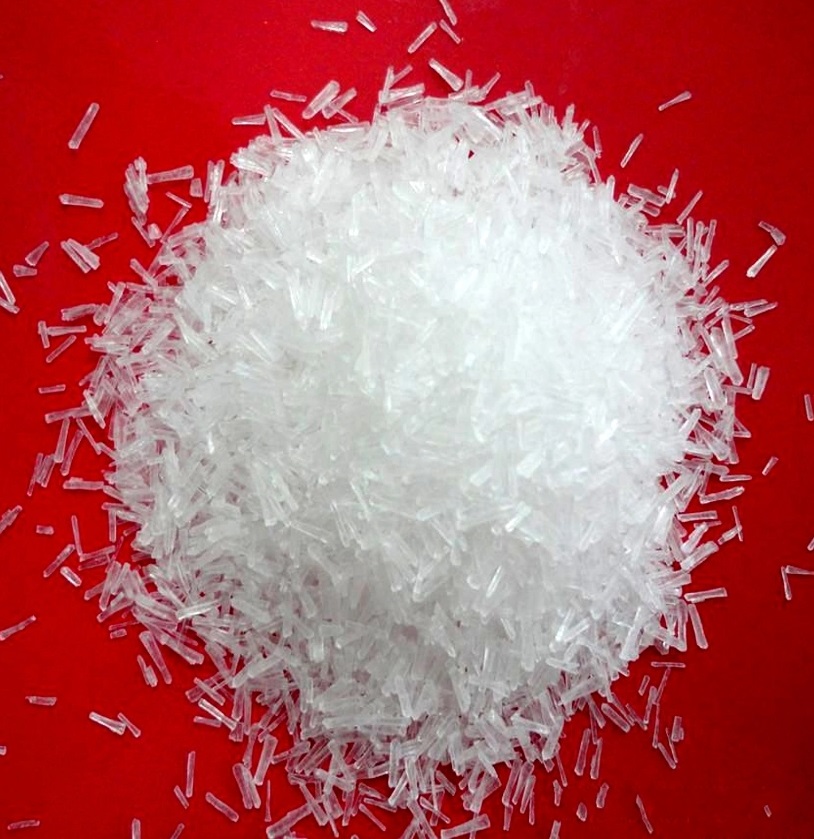
| Appearance | White crystalline powder |
| Odor | Slight, peptone-like |
| Taste | Umami (meaty, savory, brothy) |
| Physical State (20°C) | Solid (crystalline powder) |
SECTION 2: PHYSICAL PROPERTIES
| Property | Value |
|---|---|
| Appearance | White crystalline powder |
| Odor | Slight, peptone-like |
| Taste | Umami (meaty, savory, brothy) |
| Molecular Weight (Anhydrous) | 169.11 g/mol |
| Molecular Weight (Monohydrate) | 187.13 g/mol |
| Melting Point | ~232 °C (decomposes) |
| Boiling Point | 225 °C |
| Density (20°C) | ~1.46 g/cm³ |
| Solubility in Water (20°C) | Freely soluble (~740 g/L) |
| Solubility in Water (100°C) | Highly soluble |
| Solubility in Ethanol | Practically insoluble |
| Solubility in Ether | Practically insoluble |
| pH (5% aqueous solution) | 6.7 – 7.2 (neutral) |
| Optical Rotation [α]D²⁰ | +24.8° to +25.3° (L form) |
| Refractive Index | ~1.52 |
SECTION 3: CHEMICAL PROPERTIES
| Property | Information |
|---|---|
| Chemical Formula (Anhydrous) | C₅H₈NNaO₄ |
| Chemical Formula (Monohydrate) | C₅H₈NNaO₄·H₂O |
| Molecular Weight (Anhydrous) | 169.11 g/mol |
| Molecular Weight (Monohydrate) | 187.13 g/mol |
| Chemical Class | Amino acid salt (glutamate) |
| Functional Groups | Amino (-NH₂), Carboxyl (-COOH), Sodium salt |
| SMILES | C(CC(=O)[O-])C(C(=O)[O-])N.[Na+] |
| InChI Key | LPUQAYUQRXPFSQ-DFWYDOINSA-M |
| Stability | Stable under normal storage conditions |
| Decomposition | When heated, emits sodium oxide and nitrogen oxide fumes |
| Optical Activity | L-form (natural); D-form (synthetic) available |
Chemical Structure:
    O       O
    ||      ||
Na⁺O-C-CH₂-CH₂-CH-C-O⁻
              |
              NH₂

(Sodium L-Glutamate / MSG)
SECTION 4: FORMS OF MSG
| Form | CAS Number | Description |
|---|---|---|
| L-Monosodium Glutamate | 142-47-2 | Natural form; obtained from natural and fermented sources |
| D-Monosodium Glutamate | - | Synthetic form; less common |
| DL-Monosodium Glutamate | - | Racemic mixture |
| Monosodium Glutamate Monohydrate | 6106-04-3 | Crystalline form containing one water molecule |
| Monosodium Glutamate Anhydrous | 142-47-2 | Water-free form |
SECTION 5: MECHANISM OF ACTION (UMAMI TASTE)
| Parameter | Description |
|---|---|
| Taste Perception | Umami; the fifth basic taste (sweet, sour, salty, bitter, umami) |
| Receptor | Stimulates glutamate receptors on the tongue (mGluR4, mGluR1, T1R1/T1R3) |
| Effect | Provides a meaty, savory, brothy taste |
| Flavor Enhancement | Intensifies and enhances flavor; does not affect specific flavors |
| Synergy | Synergistic effect with nucleotides (IMP, GMP); increases umami taste up to 8 times |
SECTION 6: FOOD INDUSTRY APPLICATIONS (E621)
6.1. As Flavor Enhancer
| Application | Function |
|---|---|
| Processed Foods | Provides flavor, enhances taste |
| Soups and Broths | Provides meaty, savory, brothy taste |
| Instant Noodles and Soups | Enhances flavor profile |
| Sauces and Condiments | Adds flavor depth |
| Crackers and Snacks | Enhances savory taste |
| Canned Products | Flavor improvement in canned meat, fish, vegetables |
| Frozen Foods | Flavor preservation in frozen meals |
6.2. Specific Applications
| Application | Function |
|---|---|
| Canned Tuna | Flavor improvement, provides meaty taste |
| Hydrolyzed Vegetable Protein | Used as ingredient to provide meaty or savory flavor |
| Fish Oil Refining | Used in refining Omega-3 fatty acids; prevents spoilage and removes odor from fish oil |
| Caffeine Masking | Glutamic acid solution used to mask bitter taste in caffeine |
SECTION 7: INDUSTRIAL APPLICATIONS
| Application | Function |
|---|---|
| Construction Materials | As filler material in industry |
| Fish Oil Refining | Refining of Omega-3 fatty acids |
SECTION 8: NATURAL SOURCES AND PRODUCTION
8.1. Natural Sources
| Source | Content |
|---|---|
| Tomatoes | High amount of natural glutamate |
| Cheese (Parmesan) | Very high amount |
| Mushrooms | High amount |
| Meat | Medium-high amount |
| Dairy Products | Medium amount |
| Legumes | Medium amount |
| Seafood | Medium-high amount |
8.2. Production Methods
| Method | Description |
|---|---|
| Fermentation (Modern) | Sugar-based fermentation using Corynebacterium glutamicum or Brevibacterium species |
| Hydrolysis (Traditional) | Acidic or enzymatic hydrolysis of proteins |
| Synthesis | Neutralization of glutamic acid with sodium hydroxide |
SECTION 9: QUALITY SPECIFICATIONS (FOOD GRADE)
| Parameter | Specification (FCC / USP / Ph. Eur.) |
|---|---|
| Appearance | White crystalline powder |
| Identification | Positive (Sodium and Glutamate tests) |
| Assay (on dried basis) | 99.0 – 101.0% |
| pH (5% solution) | 6.7 – 7.2 |
| Optical Rotation [α]D²⁰ | +24.8° to +25.3° |
| Loss on Drying (Anhydrous) | ≤ 0.5% |
| Loss on Drying (Monohydrate) | ≤ 0.5% |
| Chlorides (Cl) | ≤ 0.01% |
| Sulfates (SO₄) | ≤ 0.02% |
| Heavy Metals (as Pb) | ≤ 10 ppm |
| Lead (Pb) | ≤ 2 ppm |
| Arsenic (As) | ≤ 3 ppm |
| Mercury (Hg) | ≤ 1 ppm |
| Cadmium (Cd) | ≤ 1 ppm |
| Other Amino Acids | ≤ 0.1% |
| Pyroglutamic Acid | ≤ 0.1% |
SECTION 10: MICROBIOLOGICAL SPECIFICATIONS
| Parameter | Specification |
|---|---|
| Total Aerobic Mesophilic Bacteria | ≤ 1,000 CFU/g |
| Yeast and Mold | ≤ 100 CFU/g |
| Salmonella spp. | Negative in 25g |
| Escherichia coli | Negative in 10g |
SECTION 11: STORAGE AND SHELF LIFE
| Parameter | Information |
|---|---|
| Storage Conditions | Cool (15-25°C), dry, well-ventilated area |
| Container Requirements | Tightly closed, original packaging |
| Protect From | Moisture (hygroscopic), strong oxidizing agents, strong acids, strong bases |
| Shelf Life | 24-60 months (unopened original packaging) |
SECTION 12: PACKAGING OPTIONS
| Packaging Type | Quantity | Material |
|---|---|---|
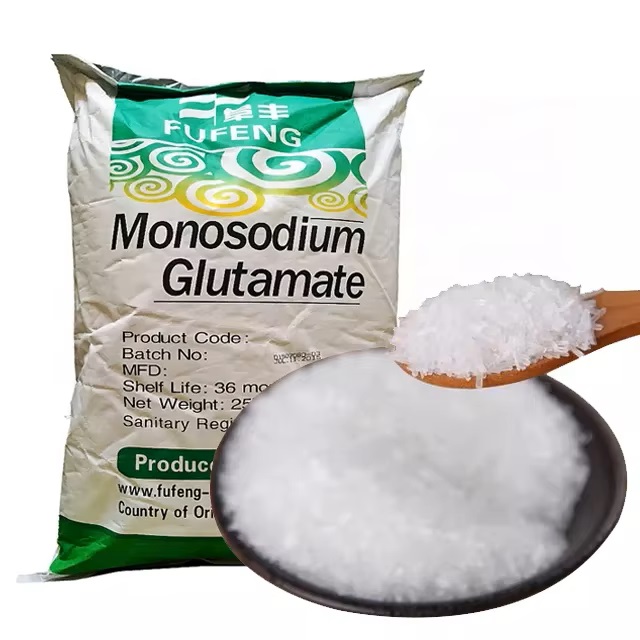
| PE-lined kraft paper bag | 25 kg | Kraft paper + PE |
| Plastic pail | 20-25 kg | HDPE |
| Aluminum foil bag | 1-5 kg | Laminated aluminum |
| Fiber drum | 25-50 kg | HDPE + PE |
| Big-Bag | 500-1000 kg | Polypropylene |
SECTION 13: SAFETY AND HEALTH INFORMATION
GHS Classification
| Hazard Class | Category |
|---|---|
| Not classified as hazardous | - |
Hazard Statements
| Code | Statement |
|---|---|
| None | Not classified as hazardous |
Precautionary Statements
| Code | Statement |
|---|---|
| P261 | Avoid breathing dust |
| P280 | Wear protective gloves/eye protection |
| P305+P351+P338 | IF IN EYES: Rinse cautiously with water for several minutes; remove contact lenses if present and easy to do; continue rinsing |
SECTION 14: TOXICOLOGICAL INFORMATION
| Parameter | Value |
|---|---|
| Oral LD50 (Rat) | > 15,000-18,000 mg/kg |
| ADI (Acceptable Daily Intake) | Not specified (JECFA) |
| Carcinogenicity | Not classified |
| Mutagenicity | Negative in standard tests |
| Reproductive Toxicity | No evidence of adverse effects |
| FDA GRAS | 21 CFR 182.1 |
| EFSA Safety Assessment | Approved; considered safe |
SECTION 15: FIRST AID MEASURES
| Exposure Route | Action |
|---|---|
| Inhalation | Move to fresh air. If respiratory irritation persists, seek medical attention. |
| Skin Contact | Wash with plenty of soap and water. |
| Eye Contact | Rinse immediately with plenty of water for at least 15 minutes. Seek medical attention. |
| Ingestion | Rinse mouth. Drink plenty of water. Seek medical attention. |
SECTION 16: REGULATORY STATUS
| Region / Authority | Status |
|---|---|
| European Union | Approved as E621 |
| USA (FDA) | GRAS (21 CFR 182.1) |
| Turkey | Approved (Turkish Food Codex) |
| JECFA (FAO/WHO) | Approved; ADI: Not specified |
| Codex Alimentarius | Approved (INS 621) |
| FCC | Monograph available |
| USP | Monograph available |
| Ph. Eur. | Monograph available |
SECTION 17: TRANSPORT INFORMATION
| Parameter | Information |
|---|---|
| UN Number | Not regulated (not dangerous goods) |
| Hazard Class | Not applicable |
| Packing Group | Not applicable |
| ADR/RID | Not regulated |
| IMDG Code | Not regulated |
| IATA (Air) | Not regulated |
| Marine Pollutant | No |
SECTION 18: FIRE-FIGHTING MEASURES
| Parameter | Information |
|---|---|
| Fire Hazard | Non-combustible (organic salt) |
| Suitable Extinguishing Media | Water spray (mist), CO₂, dry chemical powder |
| Specific Hazards | When heated, emits sodium oxide and nitrogen oxide fumes |
| Decomposition Products | Na₂O, NOx, CO, CO₂ |
| Protective Equipment | Self-contained breathing apparatus (SCBA), full protective clothing |
SECTION 19: ACCIDENTAL SPILLAGE AND CLEANUP
| Parameter | Information |
|---|---|
| Personal Protection | Nitrile gloves, protective goggles, dust mask (N95) |
| Cleaning Methods | Collect mechanically (sweep or spatula) |
| Environmental Precautions | Prevent entry into drains, soil, and surface waters |
| Waste Disposal | According to local regulations; landfilling at licensed facilities |
SECTION 20: OTHER NAMES AND SYNONYMS
| Type | Name |
|---|---|
| Turkish Names | Monosodyum Glutamat, MSG, Çin Tuzu |
| English Names | Monosodium Glutamate, MSG, Chinese Salt |
| Chemical Names | L-Glutamic Acid Sodium Salt, Sodium L-Glutamate, Sodium Acid 1-Glutamate |
| Abbreviations | MSG |
| E Number | E621 |
| CAS (Anhydrous) | 142-47-2 |
| CAS (Monohydrate) | 6106-04-3 |
| INCI | Monosodium Glutamate |
Trade Names (Partial List):
-
Ajinomoto®
-
Accent®
-
Various generics
SECTION 21: FREQUENTLY ASKED QUESTIONS ABOUT MSG
| Question | Answer |
|---|---|
| Is MSG Safe? | Yes, considered safe by JECFA, EFSA, and FDA. |
| Is MSG Natural? | Yes, glutamate is naturally found in tomatoes, cheese, mushrooms, and meat. |
| Does MSG Cause Headaches? | Scientific evidence does not support that MSG causes headaches. |
| Does MSG Cause Allergies? | MSG allergies are rare; some sensitive individuals may experience mild symptoms. |
| Is MSG Vegetarian? | Yes, when produced by fermentation, it is plant-based. |
| Is MSG Halal? | When produced by fermentation, it is considered halal. |
SECTION 22: SUMMARY AND CRITICAL NOTES
Product Summary
| Parameter | Value |
|---|---|
| Product | Monosodium Glutamate (MSG) |
| CAS (Anhydrous) | 142-47-2 |
| CAS (Monohydrate) | 6106-04-3 |
| E Number | E621 |
| Appearance | White crystalline powder |
| Molecular Weight | 169.11 g/mol (Anhydrous) |
| Primary Function | Flavor enhancer (umami) |
| pH (5% solution) | 6.7 – 7.2 |
Critical Notes
-
Umami Taste: MSG stimulates glutamate receptors on the tongue, providing a meaty, savory, brothy taste (umami).
-
Naturally Occurring: Glutamate is a naturally occurring amino acid found in tomatoes, cheese, mushrooms, meat, and dairy products.
-
Flavor Enhancer: MSG intensifies and enhances flavor; does not affect specific flavors.
-
Synergy: When combined with nucleotides (IMP, GMP), umami taste increases up to 8 times.
-
Safety: Considered safe by JECFA, EFSA, and FDA. ADI is not specified.
-
Fermentation: Modern production uses sugar-based fermentation with Corynebacterium glutamicum.
-
Regulatory Status: Approved in EU (E621), FDA (GRAS), and JECFA.
-
Halal: When produced by fermentation, considered halal.
-
Fish Oil Refining: Used in refining Omega-3 fatty acids; prevents spoilage and removes odor from fish oil.
-
Industrial Use: Used as filler material in industry and in manufacturing some construction materials.
IMPORTANT DECLARATION: This Technical Data Sheet (TDS) is for informational purposes only and has been prepared based on available technical data. The user is responsible for determining the product's suitability for their specific application and for complying with all local, national, and international regulations. For complete safety, storage, use, transport, waste, and regulatory compliance information, refer to the official Safety Data Sheet (SDS/MSDS) provided by the manufacturer/supplier. This document does not replace medical advice.