We unleash your business potential by maximize the business innovation.
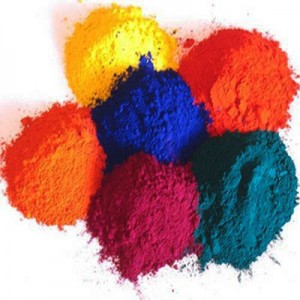
Send EmailReactive Dye
Reactive Dyes: Comprehensive Technical Overview
1. Definition & Key Properties
Reactive dyes are special colorants that form covalent bonds with fiber macromolecules (mainly cellulosic). This chemical reaction provides:
-
High wash and light fastness (permanent color)
-
Bright and vivid shades
-
Ideal for cotton and other cellulosic fibers (viscose, linen, lyocell, bamboo)
Chemical note: These dyes often contain dichloro‑ and trichloropyrimidine groups, which give high reactivity but are sensitive to hydrolysis. Therefore, pH, temperature, and process timing are critical.
2. Applications & Advantages
| Application Area | Examples |
|---|---|
| Fabric dyeing | Exhaust dyeing, padding |
| Textile printing | Flat screen, rotary screen, digital inkjet |
| End products | Home textiles, apparel, technical textiles |
Advantages:
Permanent colors, wide color range, suitable for ecological dyeing processes (low liquor ratio, energy savings).
3. Five Main Application Methods
3.1 Padding Methods (Pad‑Batch / Pad‑Dry / Pad‑Steam)
-
Process: Fabric is impregnated with a solution containing reactive dye + auxiliaries → then batched (cold), dried, or fixed with steam.
-
Advantages: Energy saving, low liquor ratio, continuous process compatibility.
-
Suitable fibers: Cotton, viscose, linen.
3.2 Exhaust Dyeing
-
Process: Fiber absorbs dye from a bath (jet, overflow, winch) at controlled temperature and pH.
-
Critical parameters: pH, temperature, salt and alkali amounts.
-
Advantages: Uniform penetration, controlled migration.
3.3 Thermofixation (Pad‑Dry‑Thermofix)
-
Process: Padding → drying → fixation at high temperature.
-
Suitable for: High‑reactivity dyes (e.g., PX series).
-
Advantages: Fast fixation, suits continuous production lines.
3.4 Pad‑Steam Fixation
-
Process: Impregnated fabric is fixed in a steam atmosphere → covalent bond forms.
-
Advantages: High color yield, environmentally friendly.
3.5 After‑Treatment (Soaping & Rinsing)
-
Purpose: Remove hydrolyzed (unfixed) dye.
-
Result: Improved color stability and fastness.
-
Note: Use chlorine‑free bleaches.
4. Method – Dye Type Matching Table
| Application Method | Suitable Dye Series |
|---|---|
| Pad‑Batch | HE, ME, Ultra series |
| Exhaust | HE, ME, SBG, RR, MDRN |
| Pad‑Steam | HE‑RD, BRF, PGR, XLDP |
| Thermofix | PX series (high reactivity) |
5. Reactivity Classification
| Type | Feature | Advantage |
|---|---|---|
| Cold reactive dyes | React at low temperature | Lower energy consumption |
| Hot reactive dyes | High fixation yield | Stronger covalent bonding |
Pre‑treatment is critical: Desizing (starch removal) and post‑bleach rinsing directly affect dyeing quality.
6. Reactive Dyes for Printing
Dye Series for Printing
| Series | Characteristics |
|---|---|
| P Series | Bright colors, high wash fastness, good covering power, reproducibility |
| R Inks | Nanotechnology, suitable for digital printing, eco‑friendly inks |
| BETAFIX P Series | Padding‑compatible, high color stability after soaping, wide color gamut |
| ULTRA RGB Series | Suitable for digital & conventional printing, high reactivity and soaping yield |
| XLDP Series | Extra soaping resistance, sharp contours and tone retention after printing |
Technical Requirements for Printing
-
High reactivity dyes (e.g., P4R, P8B, P6B)
-
Water solubility and storage stability
-
Wash, light, and perspiration fastness ≥ 4–5
-
Hydrolyzed dye must be removed by soaping after printing
Suitable fibers & printing methods:
Cotton, viscose, linen, lyocell → flat screen, rotary screen, inkjet digital printing.
7. BETAFIX Reactive Dye Product List
🟡 Yellow Group
BETAFIX YELLOW HE-4G, HE-4R, 3-RF 150%/200%, 4 GL 150%/200%, GL 150%, GR 150%, GD 3R, NG 200%, SBG, EDR, RR, MDRN, DEEP YELLOW KDB, GOLDEN YELLOW LF H/C, YELLOW XLDP, H.4G, PX6GN, PXGR, MD
🔴 Red Group
BETAFIX RED HE-3B, HE-3B 150%, HE-7B, 3-BF 150%/200%, 3BF 150%/200%/Crude, ME 3 BL, NG 200%, BB 150%, 3B 133%, 5B, RB 133%, GF, 3GX 150% Conc, PB (padding), ID, SBG, ED 7BN, SBG-S, SBG-3B, SBG-4B, MBXL-3B, RR, MDRN, DEEP RED KDB, SCARLET LF, SCARLET XLDP, RED XLDP, PX5B, P.3B, H.8B, P.6B, FN-2BL, SF, S2B, MD
🟠 Orange Group
BETAFIX ORANGE HE-R, 2-RL 150%/200%, 2RL 150%, B. ORANGE 3R 125%, SCE, S3R, ULTRA ORANGE RGB, PXRN, P.4R
🔵 Blue Group
BETAFIX TURKISH BLUE H-A, BLUE HE-GN 125%, HE-RD, HE-RD Conc/Crude, NAVY BLUE HE-R, BLUE BRF 150%/180% (PB & original), NAVY BLUE BF-P 150%, SKF-M, TURKISH BLUE G 150%/150% NEW/266%/266% NEW, BLUE KNR 160%, R Sp 150%/160%, BB 133%, SBG, NAVY ED, NAVY SBG, ULTRA BLUE RGB, ULTRA NAVY RGB/GDG/WRG, BLUE LED, MDXL, RR, MDRN, DEEP NAVY BLUE KDB, ROYAL BLUE LF, BLUE XLDP, NAVY XLDP, PX5R, TURKISH BLUE P5G, BRILLANT BLUE PGR, BLUE PX3R, NAVY BLUE P2R, TURKISH BLUE PGR, NAVY BLUE P.2R, NAVY BLUE MD
🟣 Violet Group
BETAFIX VIOLET 5R 125%
⚫ Black Group
BETAFIX BLACK RL, B 150%/200%, NN.R, WM / NBG, RG, ANN / TNN, DN Conc, CRPD, CWM, JET BLACK R, ULTRA Conc, ULTRA – Conc, WM – Conc, MDG, DEEP BLACK SNG, GX, G, R, PXN, PGR, PXGR
English Keywords:
-
Reactive dyes
-
Covalent bonding
-
Cellulosic fiber dyeing
-
Cotton dyeing
-
Viscose dyeing
-
Linen dyeing
-
Lyocell dyeing
-
High wash fastness
-
Light fastness
-
Pad-batch dyeing
-
Pad-dry dyeing
-
Pad-steam dyeing
-
Thermofixation dyeing
-
Exhaust dyeing
-
Jet dyeing machine
-
Overflow dyeing
-
Winch dyeing
-
Soaping process
-
Hydrolyzed dye removal
-
Cold reactive dyes
-
Hot reactive dyes
-
Textile printing
-
Flat screen printing
-
Rotary screen printing
-
Digital inkjet printing
-
BETAFIX dye series
-
HE series reactive dyes
-
ME series reactive dyes
-
SBG series dyes
-
RR series dyes
-
MDRN series dyes
-
XLDP series dyes
-
PX series dyes
-
Ultra RGB series
-
P series printing dyes
-
Nanotechnology ink
-
Pretreatment (desizing, bleaching)
-
Chlorine-free bleach